
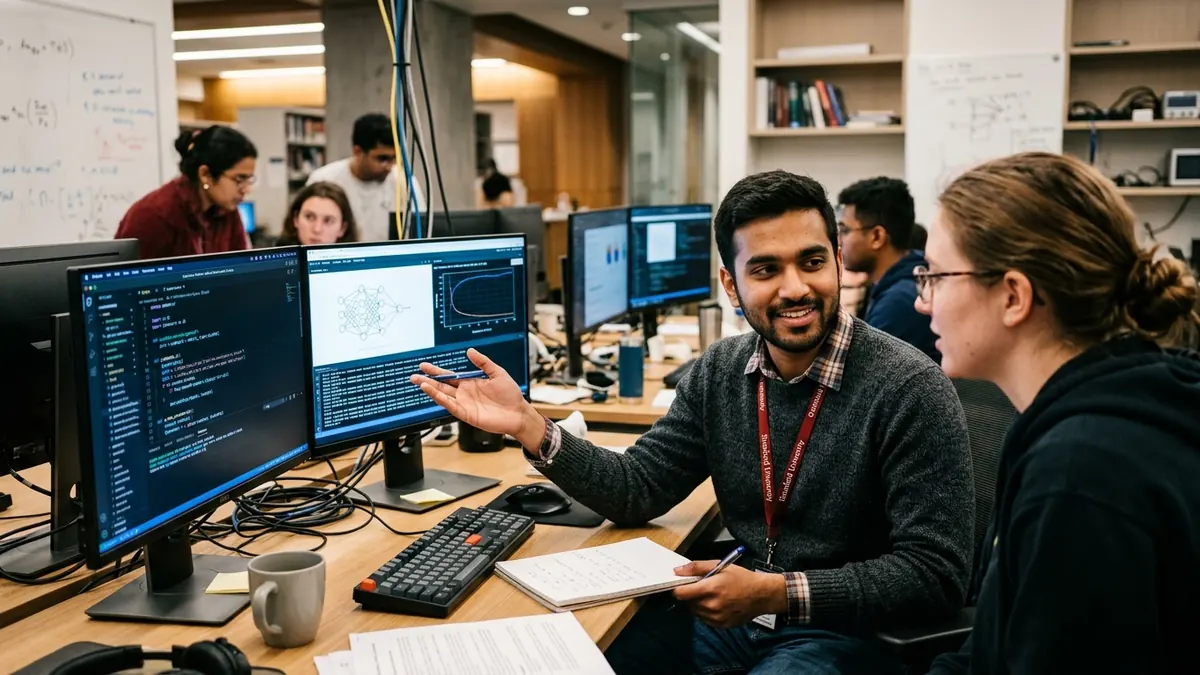
Every admissions cycle, international students take on substantial educational loans to fund master degrees across the United States, Canada and Europe. Many applicants assume that securing a graduate assistantship is reserved exclusively for doctoral candidates or academic scholars. In reality, universities worldwide allocate substantial funding annually in teaching and research appointments to incoming master students who prove practical technical capabilities early. Understanding the international hiring process helps candidates eliminate tuition liabilities and secure monthly stipends before stepping foot on campus.
A graduate assistantship is an official university employment appointment providing international master and doctoral students with substantial to full tuition remission and high to moderate monthly living allowances in exchange for part-time teaching, laboratory research or technical administration.
In This Global Guide
6 Chapters Covering US, Canada, Germany & Global Hubs
In This Global Guide
6 Chapters Covering US, Canada, Germany & Global Hubs
What is a Graduate Assistantship and How Does Global Funding Work?
A graduate assistantship is an official contractual employment position offered by academic departments or research centers. Students work part-time in exchange for regular stipend payments, while many universities outside tuition-free zones also grant substantial or complete academic tuition waivers.
When prospective international scholars begin exploring overseas master degrees, confusion often arises around financial terminology. Scholarships and merit grants generally function as single-time tuition discounts or fixed awards credited toward university invoices. In contrast, an appointment as a graduate assistant is a formal employment contract governed by departmental budgets, external faculty grants, or collective bargaining agreements.
Appointment structures vary across destination countries. At universities in the United States and Canada, appointments are calculated as percentages of a standard workweek, allowing students to work within legal student visa limits during active academic terms. These contracts typically include full tuition remission, institutional health insurance subsidies, and bi-weekly salary disbursements.
In Continental Europe and the United Kingdom, academic funding follows distinct structural principles. Public universities in Germany, for example, do not charge traditional tuition fees, meaning assistantship contracts function as direct student employee wages (HiWi or Hilfswissenschaftler) rather than tuition waiver vehicles. In the UK and Australia, institutions offer competitive graduate teaching demonstrator posts and research studentships that combine fee scholarships with maintenance grants. Exploring these funding models through structured study abroad counseling allows applicants to target universities with proven funding records for master candidates.
Sponsored Faculty Grants
Funded through scientific agencies like NSF, NIH, NSERC, or corporate R&D contracts directly controlled by principal investigators.
Instructional Operating Budgets
Financed by academic faculties to support large undergraduate classes, grading queues, laboratory recitations, and student tutoring centers.
Operational Divisions
Supported by institutional offices such as admissions, campus analytics, international student services, and library technical units.
Research Assistantship vs Teaching Assistantship: Operational Breakdown Across Destinations
A research assistantship emphasizes laboratory experimentation, code implementation and scholarly papers funded by faculty grants. A teaching assistantship centers on leading recitations, evaluating assignments and holding student office hours funded by departmental operational budgets.
Comparing a research assistantship vs teaching assistantship is a primary consideration when structuring graduate applications. While both appointments provide equivalent financial support and tuition relief in countries like the United States and Canada, their operational rhythms, evaluation criteria, and supervisor expectations diverge significantly.
In a research assistant role, you work under a primary investigator running a laboratory or data initiative. Your daily tasks involve building data pipelines, training computational models, designing experimental hardware, and drafting conference papers. Supervisors prioritize practical technical capability over theoretical grades. If an applicant demonstrates competence in Python scripting, statistical analysis, or database query development prior to arrival, they offer immediate laboratory value.
Conversely, a teaching assistantship is assigned by department chairs or course coordinators to support high-enrollment courses. Teaching assistants grade assignments, supervise computer recitations, and conduct weekly office hours for undergraduate students. Because teaching assistants interface directly with students, universities enforce oral communication standards, evaluating presentation clarity and subject command.
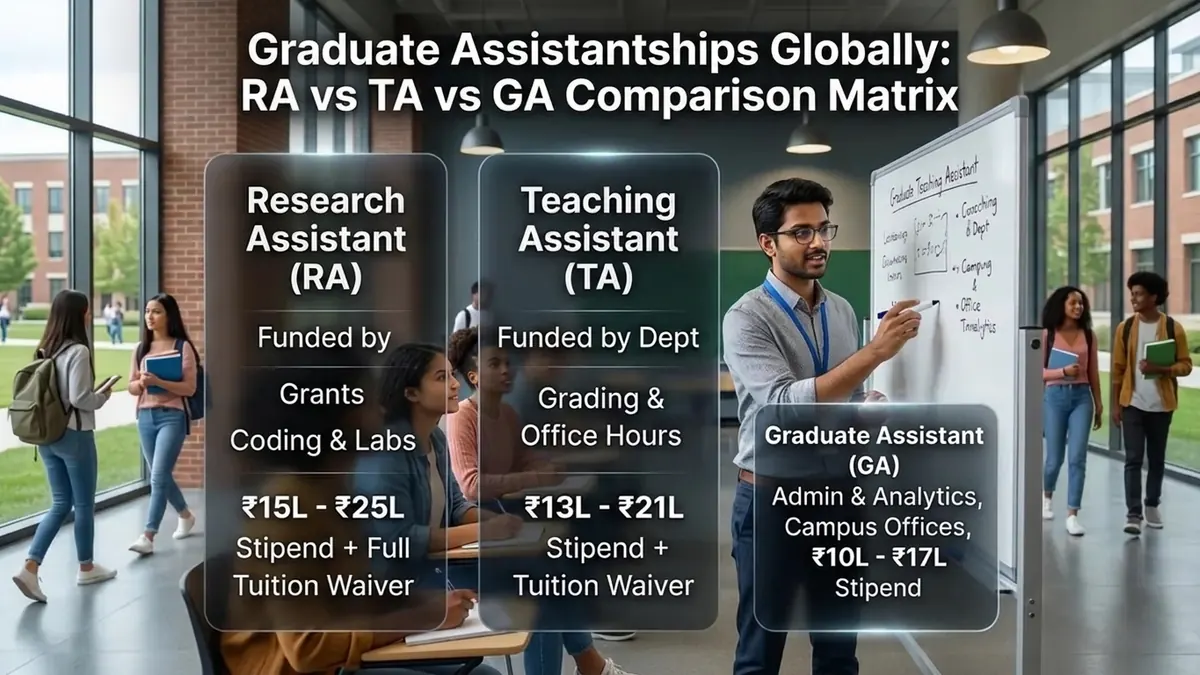
Figure 1: Comprehensive matrix detailing funding origins, responsibilities and tuition waiver standards across RA, TA and GA appointments.
Beyond traditional teaching and research positions, universities worldwide offer Graduate Administrative Assistantships (GA). These appointments exist in administrative bodies, including university registrar offices, international student centers, campus IT divisions, and institutional research units. Administrative roles frequently provide matching tuition remission benefits and competitive pay while calling for practical workplace capabilities such as SQL query drafting, dashboard reporting, and workflow optimization. Highlighting these skills in an ATS-compliant academic CV format enables applicants to capture opportunities across campus divisions.
| Appointment Aspect | Research Assistant (RA / GRA) | Teaching Assistant (TA / GTA) | Graduate Administrative Assistant (GA) |
|---|---|---|---|
| Funding Origin | Sponsored research grants (NSF, NIH, NSERC, DFG) | Departmental instructional operating budgets | Central university administrative divisions |
| Compensation Bracket | High tier hourly pay with full living stipend | High tier hourly pay with full living stipend | Moderate to high tier hourly pay scale |
| Core Daily Duties | Data pipelines, coding, bench tests, scholarly papers | Grading homework, recitation labs, student office hours | Database querying, BI dashboards, student operations |
| Primary Hiring Driver | Practical project portfolios, GitHub code, lab readiness | Strong subject grades, spoken English clarity, presentation | SQL, data reporting, institutional systems coordination |
| Tuition Relief Scale | Substantial to full tuition remission; zero in tuition-free Europe | Full tuition remission in US/Canada; fee credits elsewhere | Partial to full tuition waiver based on contract hours |
| Career Impact | Co-authored publications, corporate R&D entry, PhD access | Instructional credentials, communication mastery, faculty references | Enterprise operations experience, administrative references |
Global Compensation Tiers and Living Support: US, Canada, Germany and the UK
Graduate assistant compensation sits in competitive brackets across premier destinations. The United States and Canada provide a high compensation tier with substantial tuition waivers, while Germany offers moderate hourly wages that comfortably cover living costs in a tuition-free university framework.
When evaluating the financial viability of studying abroad, analyzing gross tuition fees without factoring in assistantship economics presents an incomplete picture. An assistantship appointment transforms graduate school finances by replacing out-of-pocket tuition payments with regular earnings and institutional fee waivers.
In the United States, compensation includes two separate financial elements: the bi-weekly paycheck delivered directly to the student for living expenses, and the tuition remission credited against university bursar accounts. For private institutions charging premium tuition rates, the tuition waiver represents the single largest cost reduction. Students targeting technical analytics programs can review our breakdown of the best country to study data analytics to see how regional tuition levels and assistantship availability compare internationally.

Figure 2: Global assistantship compensation tiers, living support levels and tuition remission structures across key study abroad destinations.
In Germany, where public universities charge zero tuition, assistantships operate through student employee frameworks known as HiWi contracts. Students work part-time alongside their academic schedules, earning moderate hourly wages. This income allows students to cover housing and living costs without depleting their blocked account funds, as detailed in our guide to studying in Germany for free across public institutions.
| Country / Destination | Hourly Pay Tier | Monthly Living Support | Tuition Remission Scale | Overall Financial Relief |
|---|---|---|---|---|
| United States (F-1 Visa) | High Tier | High (covers housing, food & utilities) | Full tuition remission in most 20-hr roles | Very High Impact |
| Canada (Study Permit) | Moderate to High Tier | Moderate to High (covers basic living expenses) | Substantial to full tuition offset | High Impact |
| Germany (Student Visa) | Moderate Tier | Moderate (offsets blocked account needs) | Tuition is already zero at public universities | High Impact |
| United Kingdom (Student Route) | Moderate Tier | Moderate (offsets city living costs) | Partial to institutional fee credits | Moderate to High |
| Australia (Subclass 500) | High Tier | High (strong hourly sessional rates) | Full remission under research scholarships | High Impact |
The 5-Step Strategic Roadmap to Secure a Graduate Assistantship Abroad
Securing an assistantship requires shortlisting funded academic departments, building reproducible technical code assets, integrating course competencies into application essays, executing personalized faculty outreach and connecting with program directors during orientation week.
Departmental appointments are not awarded through luck. Successful applicants follow a systematic protocol that begins long before submitting university applications and continues through arrival on campus. Understanding how to navigate this process gives master candidates an advantage over applicants relying solely on admission credentials.
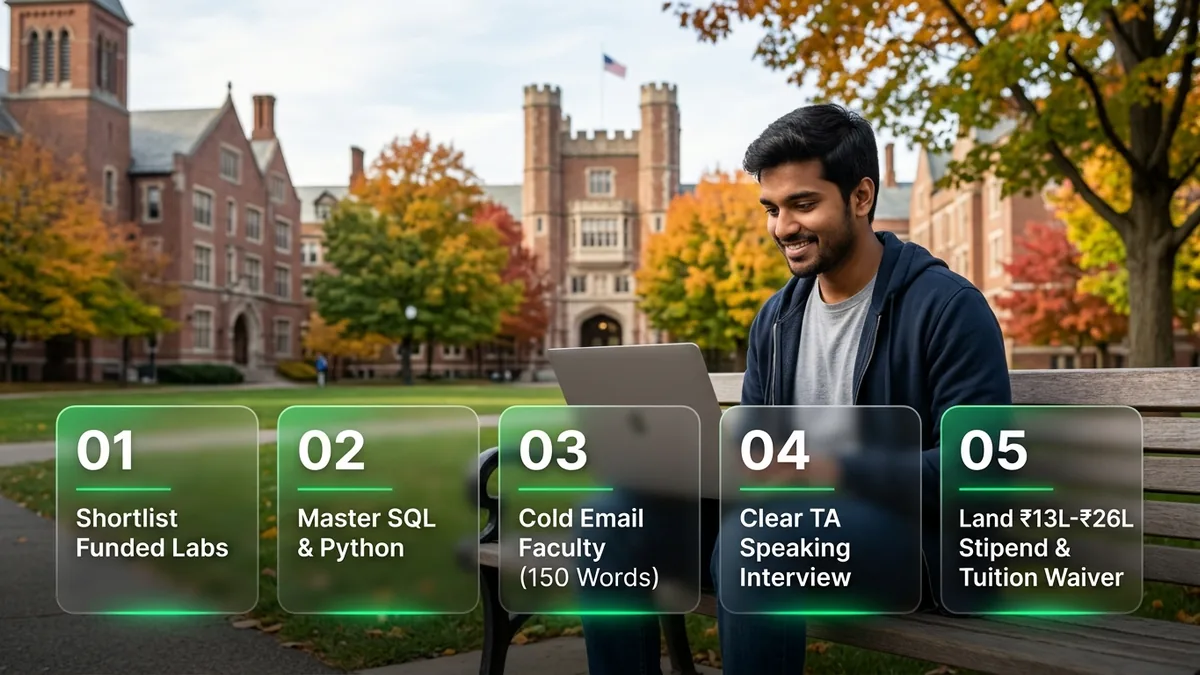
Figure 3: Five-stage pre-departure strategic timeline to secure funded assistantships, tuition waivers and monthly research stipends.
Execute each phase of the following five-stage methodology:
Step 01: Target Departments with Documented Master Funding
Examine departmental graduate handbooks to verify whether master students are eligible for teaching and research appointments. Large public universities with extensive undergraduate class sizes routinely employ dozens of master students to conduct recitations, grade problem sets, and supervise laboratory sections.
Step 02: Construct Verifiable Technical Proof-of-Work Assets
Build public GitHub repositories containing clean code pipelines, schema architecture, and interactive dashboards. When faculty review inquiries, an accessible repository showcasing functional code establishes technical credibility immediately.
Step 03: Anchor Instructional Competence in Application Essays
Check the assistantship consideration box on application portals and dedicate two targeted sentences in your Statement of Purpose identifying specific undergraduate courses you possess the depth to tutor. Crafting your essay according to how to write an SOP for MS abroad ensures your profile enters departmental funding pools during initial admissions review.
Step 04: Transmit Targeted Faculty Inquiries Post-Admission
Between February and May, after securing your admission offer, contact professors whose recent research publications align directly with your undergraduate capstone work. Highlight specific technical contributions you can deliver to active laboratory projects.
Step 05: Connect with Department Coordinators During Orientation
Arrive on campus ten to fourteen days before instruction begins. Introduce yourself to graduate program coordinators and express your availability for grading or tutoring appointments. Last-minute course enrollment changes frequently create unannounced positions awarded to students present on campus.
Cold Emailing Global Faculty: Proven Outreach Framework and Templates
An effective academic cold email is under 180 words, cites a peer-reviewed paper published by the faculty member within the last 18 months, links a reproducible technical project demonstrating relevant methodologies and requests a brief 10-minute introductory conversation.
University faculty members receive dozens of unsolicited funding inquiries every day. The majority read like mass form letters containing generic statements expressing admiration for the professor work. Professors routinely delete these messages within seconds. Securing a reply requires structuring the email as a focused technical proposition.

Figure 4: Four-stage engineering blueprint for high-converting academic cold emails with faculty publication mapping.
Review the structural contrast between an unfocused mass message and a well-engineered technical inquiry:
Respected Professor, I have received admission to your prestigious master program for Fall 2026. I am hardworking and passionate about machine learning and data analytics. I kindly request you to grant me a Research Assistantship under your guidance to support my study expenses. My resume is attached for your review.
Dear Professor Vance, I am an incoming MS student for Fall 2026. I read your recent paper on latency optimization in distributed graph pipelines. During my undergraduate capstone, I resolved similar memory bottlenecks by refactoring indexing algorithms in PostgreSQL and Python, improving query execution speeds by 38% across an 800,000-record dataset (GitHub repository linked below). Would you have 10 minutes next week to discuss whether my pipeline background aligns with your laboratory research initiatives?
Four Principles for High-Converting Faculty Outreach
Read the abstract, methodology, and experimental results of a paper authored by the faculty member within the last 18 months before reaching out.
Center the discussion around laboratory needs and technical overlap. Assistantship funding follows naturally when mutual project alignment is confirmed.
Provide direct links to reproducible GitHub repositories demonstrating clear documentation, clean code syntax, and data preprocessing logic.
If no reply arrives after seven to ten business days, send a polite two-sentence follow-up on the original thread to gently bump the conversation.
Essential Skills for Research Assistants and On-Campus Employment
The primary technical competencies demanded by university laboratories are SQL querying, Python automation, data visualization and Git version control. For teaching appointments, subject mastery and clear spoken communication are the decisive evaluation standards.
Faculty members do not hire graduate assistants to teach them foundational programming concepts. Supervisors manage tight grant deadlines and project milestones; they recruit students who can contribute immediately. This reality explains why assistantship postings across engineering, business analytics, life sciences, and economics departments consistently prioritize practical technical skills. Applicants can contrast specialized degree paths in our analysis of MSBA vs Data Science abroad to see how curriculum coursework aligns with departmental funding options.
Relational database fluency remains the single most versatile technical competency across academic units. University administrative divisions, institutional research bodies, and business departments manage massive relational databases. Students who complete practical SQL training in Indore gain hands-on experience constructing complex queries, window functions, and database optimizations, opening immediate opportunities for administrative assistantships.
Python Scripting & Data Analysis
Automated data extraction, data cleansing with Pandas, and statistical modeling. The foundational programming toolset demanded across engineering, health science, and business labs.
Relational Database Querying
Writing multi-table joins, subqueries, and aggregations on PostgreSQL and MySQL databases. The core capability requested for administrative and operational campus appointments.
Interactive Reporting Dashboards
Building dynamic visualization reports in Power BI and Tableau. University faculties hire graduate assistants to transform complex administrative datasets into actionable visual insights.
Git Version Control & Documentation
Managing collaborative laboratory repositories, branches, and reproducible Markdown documentation. Faculty inspect commit histories to confirm genuine technical authorship.
If an assistantship appointment is not finalized prior to departure, incoming students should actively target general on-campus jobs during their initial weeks. Campus library service desks, student unions, recreational centers, and technical service desks hire thousands of international students each semester. While these hourly jobs rarely include tuition remission, they establish domestic employment references, generate immediate cash flow, and bring students into direct contact with faculty and department coordinators who hire assistants for subsequent terms.
Schedule a Profile Audit in Indore at Analyticall Chefs
Online forums and generic consultants cannot evaluate whether your capstone projects match specific faculty research grants abroad. At Analyticall Chefs, located at 809 Shekhar Central, Palasia Square, Indore, our mentors conduct dedicated pre departure assistantship training sessions. We audit your technical projects, build tailored faculty outreach shortlists, conduct mock technical interviews and refine your academic CV so you land abroad prepared to secure funded appointments.
FAQ's
Direct answers on graduate assistantships, international pay scales, tuition remission and profile preparation.
What is the difference between a research assistantship vs teaching assistantship across global universities?
A research assistantship is funded directly through a faculty member external research grant to conduct laboratory experiments, code development or quantitative modeling. A teaching assistantship is funded from departmental academic budgets to lead discussion sections, evaluate student assignments and conduct office hours. In the United States and Canada, both appointments offer full or partial tuition remission alongside moderate to high monthly living stipends. In Germany and Continental Europe, student research assistantships operate on moderate hourly wages without formal tuition waivers because public university education is already tuition-free.
Can international master students get a graduate assistantship in their first semester abroad?
Yes, international master students frequently secure assistantships in semester one, provided they execute early outreach between February and May before arriving on campus. While doctoral candidates receive multi-year institutional funding upon admission, departments with high undergraduate enrollments rely heavily on qualified master students for grading, lab instruction and data engineering. Applicants who showcase reproducible GitHub repositories, SQL query pipelines and targeted faculty paper alignment stand out to professors facing immediate laboratory deadlines.
What is the pay tier and monthly stipend level for graduate assistants across the US, Canada, Germany and the UK?
Compensation operates on tiered brackets determined by national frameworks, departmental endowments and local living costs. In the United States, research and teaching appointments fall into a high compensation tier offering substantial monthly living stipends combined with complete tuition remission. In Canada, appointments provide moderate to high hourly compensation under union agreements. In Germany, student research assistants receive moderate hourly compensation that comfortably meets monthly living allowances, while UK graduate demonstrators and Australian sessional tutors benefit from moderate to high hourly brackets.
How many hours per week can international students work on campus under student visa regulations?
Visa regulations set strict working thresholds. Under United States F-1 visa regulations, international students can work up to 20 hours per week on campus while classes are in session and full-time during recognized school breaks. In Canada, students on valid study permits may work on-campus alongside regulated off-campus allowances. In Germany, international students can work up to 140 full days or 280 half days per calendar year, while United Kingdom student visa holders are restricted to 20 hours per week during term time.
How does a graduate assistantship impact tuition fees and can it eliminate educational loan debt completely?
At American and Canadian institutions, an appointment typically includes full tuition remission alongside institutional healthcare subsidies, eliminating most or all of the principal academic tuition liability. Combined with monthly living stipends that cover housing, groceries and personal utilities, students in low to moderate cost regions can complete their graduate degree with negligible loan borrowing. In Germany, where public tuition is already zero, the monthly assistantship income directly covers statutory blocked account living allowances.
Where can students prepare their technical profile and cold email strategy before departing abroad?
Aspirants can visit Analyticall Chefs at 809 Shekhar Central, Palasia Square, A.B. Road, Indore. The mentorship team conducts hands-on pre departure technical training covering faculty research mapping, academic cold email engineering, ATS-standard academic CV restructuring and technical data labs in Python, SQL and Power BI to help candidates win funded appointments before flying abroad.
Study Abroad Consultant & Founder @ Analyticall Chefs | Visiting Analytics Faculty at NMIMS | Dual Master's (US)
Sarvagya Tongia is the Founder and Director of Analyticall Chefs, and a Visiting Faculty member at NMIMS teaching Business and Marketing Analytics. He holds a Dual Master's Degree in Finance and Information Technology & Management from the University of Texas at Dallas (UTD). With extensive international corporate experience working as a data and financial analyst in the United States, Sarvagya brings a rigorous, application-first philosophy to modern education.
Through Analyticall Chefs, he is dedicated to eliminating the traditional gaps in the education system by combining elite foreign education consulting with an intensive skills accelerator. His methodology focuses on transforming students and professionals into high-value, execution-ready assets equipped with the exact technical stack, communication mastery, and strategic frameworks needed to thrive globally.
How to Study in Germany for Free in 2026: Tuition-Free Public Universities, APS & Blocked Account
Academic CV Format for MS in US: How to Build an ATS-Standard Profile for 2026 Admissions
Cut Your Overseas Master Tuition Bill Before You Fly
Do not risk your study abroad finances on generic assumptions. Connect with the technical admissions mentors at Analyticall Chefs in Indore for a comprehensive assistantship and tuition waiver profile audit.
Book an In-Person Assistantship Audit