
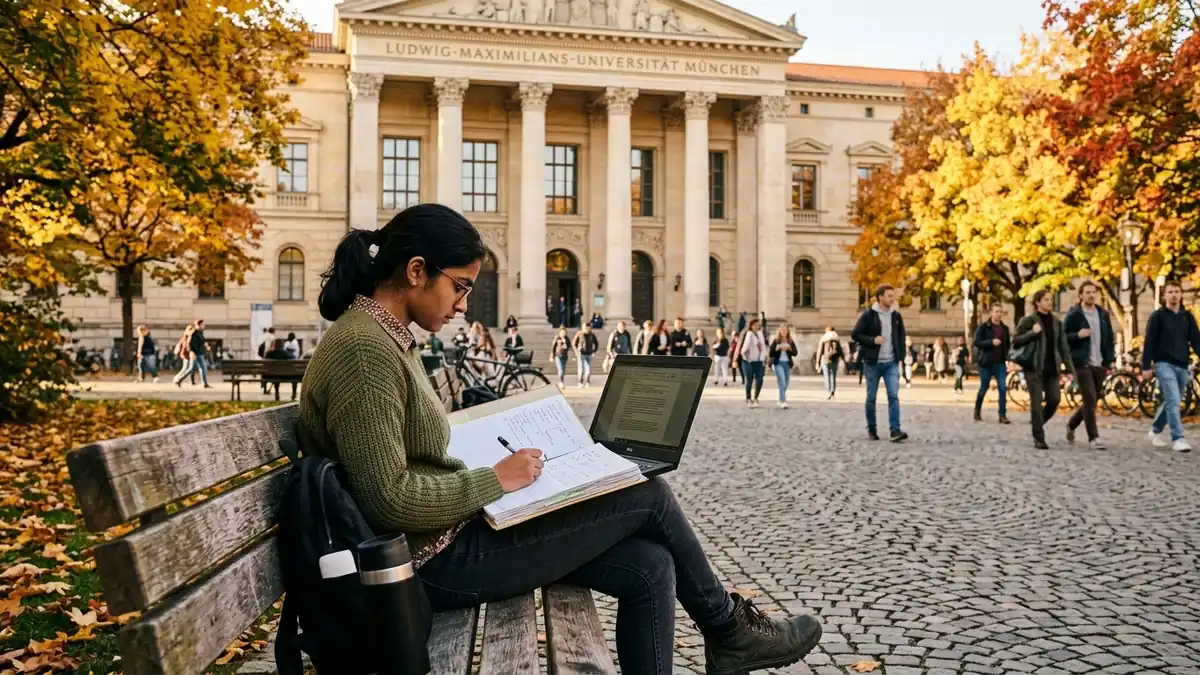
For ambitious engineering, computer science and business graduates in India, financing an international master degree has become a daunting financial obstacle. With American and British university tuition fees routinely crossing 40 to 70 Lakh Rupees, families frequently risk mortgaging residential assets to secure educational loans. Yet across continental Europe, Germany continues to fund world-class higher education where international students pay exactly zero tuition fees.
The opportunity to study in Germany free is not a marketing gimmick or an obscure scholarship reserved for a handful of toppers. It is a legally enshrined federal policy designed to attract technical talent to sustain the German industrial economy. However, securing a seat at prestigious institutions requires navigating strict compliance frameworks, including the mandatory APS certificate verification, rigorous credit matching rules and blocked account funding.
In this comprehensive 2026 admissions manual, we break down how German public universities operate, compare them against commercial private universities, analyze the exact APS verification protocol, outline the 11,904 Euro blocked account requirement and explain how pre-departure technical skills unlock high-paying student jobs.
In This Guide
6 Key Chapters - Tap to Jump or Collapse
In This Guide
6 Key Chapters - Tap to Jump or Collapse
Can Indian Students Study in Germany for Free in 2026?
Indian students can study in Germany free at virtually all public universities because federal law considers higher education a public good. Except in Baden-Wurttemberg, which charges 1,500 Euros per semester, public universities charge no tuition fee. Students pay only a nominal semester contribution of 150 to 350 Euros covering regional transit passes.
When Indian applicants hear about tuition-free education abroad, skepticism is natural. In India, premier education comes with competitive fees, while in nations like the US or Australia, international candidates are charged three to four times more than domestic citizens. Germany operates on an entirely different economic model. The German social market economy views higher education as a strategic national investment. German demographic models project an ongoing shortage of specialized engineers, data analysts, computer scientists and researchers. By offering zero tuition at state-funded institutions, the German government attracts high-caliber minds to fuel its industrial engines.
In 2014, all 16 German federal states officially abolished tuition fees for domestic and international students enrolled in undergraduate and consecutive master programs. While the southwestern state of Baden-Wurttemberg reintroduced a fee of 1,500 Euros per semester for non-EU students in 2017, the remaining 15 federal states, including Bavaria, North Rhine-Westphalia, Berlin, Hesse and Saxony, remain 100% tuition-free.
Instead of paying tuition, students pay a mandatory semester ticket and administrative fee known as the Semesterbeitrag. This fee ranges between 150 and 350 Euros per semester (roughly 13,000 to 31,000 INR). In return, students receive a student transit pass that grants unlimited travel on local buses, trams, subways (U-Bahn) and regional commuter trains (S-Bahn) throughout their entire federal state.
Zero Tuition Standard
Over 300 state-funded public institutions charge zero tuition for consecutive master degrees across engineering, IT and science.
150 - 350 EUR Contribution
Includes complete public transit passes covering state-wide railway, student union services and sports facilities access.
140 Full Days Allowance
International scholars can work up to 140 full days or 280 half days per year, earning 14 to 22 Euros per hour in technical positions.
However, zero tuition does not mean zero barrier to entry. German public universities maintain some of the most rigorous academic admission standards in the world. Admissions committees do not care about your financial capability; they evaluate your undergraduate curriculum credits, theoretical mathematics foundation and technical project competency. Aligning your academic profile with faculty expectations through structured study abroad counseling ensures your application meets stringent German university standards.
How Do Public Universities in Germany Compare to Private Institutions?
Public universities in Germany educate over 94% of the student population, produce globally respected academic research, charge zero tuition and hold maximum credibility with German employers. In contrast, private German universities charge 10,000 to 24,000 Euros annually, maintain lower entry barriers and are frequently marketed by commission agents despite inferior industrial standing.
A major trap facing Indian students during their initial research involves confusing German public universities with profit-driven private colleges. In countries like the United States, private universities such as Stanford, MIT and Harvard represent the gold standard of academic prestige. In Germany, the dynamic is completely inverted. The public university system contains the nation oldest, most respected and scientifically prestigious institutions, including the elite TU9 alliance of technical universities.
Public universities such as Technical University of Munich (TUM), RWTH Aachen, Karlsruhe Institute of Technology (KIT), TU Berlin and University of Stuttgart receive billions of Euros in federal research funding. German industry titans, including Siemens, BMW, Mercedes-Benz, SAP, BASF and Bosch, recruit their engineering, data science and supply chain leaders directly from public university laboratories.
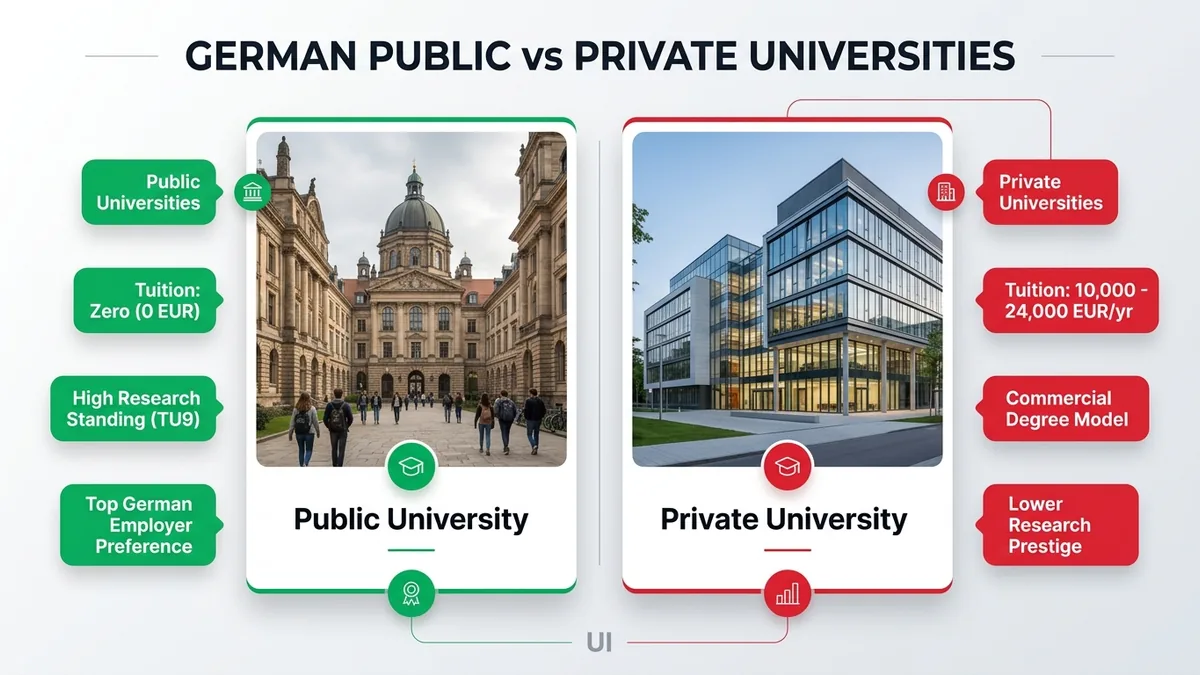
Figure 1: Strategic comparison of public versus private German higher education institutions with real campus profiles.
Private universities in Germany cater primarily to students who fail to meet the stringent academic requirements of public institutions. Because public universities refuse to pay recruitment commissions, many commercial education agents steer unsuspecting Indian candidates toward expensive private colleges where annual tuition runs between 10,000 and 24,000 Euros (10 to 22 Lakh INR). Candidates graduating from these private institutions often struggle to find technical engineering employment because German corporate recruiters heavily favor public university credentials.
| Evaluation Parameter | Public Universities in Germany | Private German Colleges | Impact on Indian Students |
|---|---|---|---|
| Annual Tuition Fee | 0 EUR (Zero Tuition) | 10,000 - 24,000 EUR | Save 20 - 45 Lakh INR in debt |
| Admission Criteria | Strict Credit & GPA Requirements | Lenient / Open Enrollment | Merit determines acceptance |
| Employer Reputation | Highest National Prestige | Variable / Skeptical Standing | Faster corporate hiring |
| Research Infrastructure | Advanced Labs (Fraunhofer, Max Planck) | Classroom-Centric Teaching | Hands-on technical mastery |
| Post-Study Work Visa | 18 Months Jobseeker Permit | 18 Months (If State-Recognized) | Equal legal timeline |
When applying to public institutions, your Statement of Purpose and academic curriculum vitae must demonstrate rigorous laboratory competencies and theoretical readiness. You can review our detailed guide on how to write an SOP for MS abroad to structure an essay that highlights your quantitative capabilities for German faculty review.
What is the Step-by-Step APS Certificate Germany Process for Indian Applicants?
The APS certificate Germany process is a mandatory authentication protocol conducted by the Academic Evaluation Centre of the German Embassy in New Delhi. Indian applicants must register at aps-india.info, pay an 18,000 INR verification fee, courier certified academic documents and obtain a digital certificate before applying for university admission and student visas.
Introduced in November 2022, the Akademische Prufstelle (APS) requirement established a strict verification standard for Indian nationals seeking to study in Germany free. In previous years, fraudulent degree certificates and fabricated academic marks caused severe administrative bottlenecks at the German Embassy. To streamline genuine applications, the German government made the APS certificate mandatory for all Indian citizens pursuing higher education in Germany.
Without a valid APS digital certificate, an Indian student cannot book a German student visa appointment at VFS Global, nor can they submit applications to universities that utilize the Uni-Assist portal. The verification confirms that your degree granting institution in India is recognized under the official German Anabin database and that your academic transcripts match university records.
Online Registration on APS India Portal
Create an applicant profile on the official APS India verification portal, select the appropriate verification category (Undergraduate, Postgraduate or Ph.D.) and fill out your educational history.
Payment of Verification Fee (18,000 INR)
Transfer the non-refundable verification fee of 18,000 INR through online bank transfer (NEFT/RTGS) to the official APS German Embassy account and retain the transaction receipt.
Document Compilation and Courier Submission
Print the signed application consent form and package your notarized mark sheets, provisional degree or final degree certificate, 10th and 12th certificates, passport copy and language proficiency test score (IELTS or TOEFL). Courier the physical dossier to the APS office in New Delhi.
Institutional Verification & Professor Email
The APS verification officers contact the registrar or examination controller of your Indian university. Ensure your college professors monitor their official institutional email addresses (.edu.in or .ac.in) to promptly verify your academic credentials.
Digital Certificate Issuance via Secure Email
Upon successful evaluation, APS issues a digitally signed verification certificate via email. This digital certificate contains a secure QR code and does not expire, serving as your permanent verification for university admissions and visa processing.
Because APS verification typically requires 4 to 8 weeks to complete, delayed submissions represent the single largest reason Indian candidates miss university deadlines for winter (October) and summer (April) intakes. Students from Madhya Pradesh and Central India can consult our team for skill-first study abroad consulting and a comprehensive audit of their academic transcripts before submitting dossiers to New Delhi.
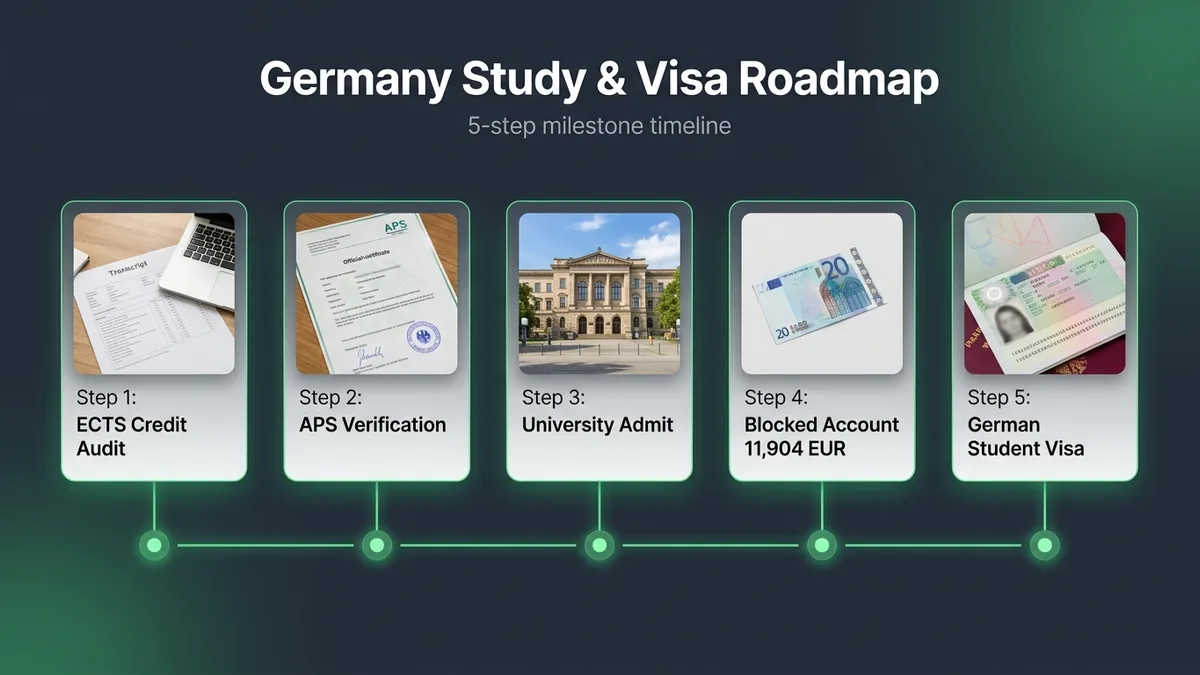
Figure 2: The end-to-end zero-tuition German public university application blueprint and visa compliance pathway.
How Much Funds Are Required for a German Blocked Account in 2026?
In 2026, the German Federal Foreign Office mandates a blocked account deposit of 11,904 Euros (approximately 10.8 to 11.2 Lakh INR) for international student visa issuance. This statutory balance guarantees living expenses for your first academic year, releasing exactly 992 Euros per month into your German current account.
For ambitious Indian students pursuing the pathway to study in Germany free, German public universities charge zero tuition, yet the German government requires concrete proof that incoming scholars will not become dependent on social welfare. This financial proof is satisfied through a Sperrkonto, or blocked account. Unlike standard bank savings accounts where funds can be withdrawn at will, a blocked account freezes the deposited capital upon transfer.
Once you land in Germany, complete your local city hall address registration (Anmeldung) and open a free student current checking account with a German bank (such as N26, Sparkasse or Deutsche Bank), your blocked account unlocks. The service provider transfers exactly 992 Euros into your checking account on the first of every month to pay for rent, groceries, student health insurance and personal necessities.
The primary government approved blocked account providers for Indian students include:
Expatrio
Combines the blocked account with statutory public health insurance (Techniker Krankenkasse or Barmer), digital setup and rapid visa confirmation letter generation.
Fast Digital VerificationCoracle
Known for transparent fee structures, bundled German health insurance packages and zero monthly account maintenance surcharges for scholars.
Transparent Package PricingFintiba
One of the earliest digital Sperrkonto platforms partnering with Sutor Bank, featuring intuitive mobile tracking and automated monthly payouts.
Established Banking PartnerIt is critical to recognize that the 11,904 Euro deposit remains your personal money. It is not an expenditure or a university fee; it is your living fund for twelve months. Compare this with studying in the United States or the United Kingdom, where students pay 30 to 50 Lakh INR in non-refundable tuition fees alongside separate living expenses. In Germany, your total capital requirement for year one is limited to your personal living deposit.
What Are the Best MS in Germany in English Programs and Admission Requirements?
German public universities offer over 2,000 English-taught master programs in Computer Science, Data Science, Mechanical Engineering, Power Systems and International Business. Admission criteria demand a relevant four-year bachelor degree, strict ECTS credit equivalence in mathematics and core disciplines, an academic GPA above 7.5 CGPA and IELTS band 6.5 or above.
A common misconception among Indian engineering graduates is that studying in Germany requires fluency in the German language before departure. While bachelor programs in Germany are predominantly delivered in German, graduate master degrees are deliberately internationalized. Through the official DAAD academic database, candidates can search through hundreds of fully English-taught Master of Science and Master of Engineering curricula.
Why English Gets You Admitted, But German Is Non-Negotiable to Survive and Grow
Almost no commercial study abroad agency or conventional counselor stresses the importance of learning German. They avoid this discussion because convincing students to learn a foreign language takes hard work, and they prefer promising an effortless English-only pathway. While you can complete your master degree 100% in English at premier public universities, surviving in the German job market and achieving rapid career growth without the German language is virtually impossible. English gets you through university lectures, but German gets you hired, promoted and integrated into high-paying corporate teams.
Campus Survival & Administration
Essential for municipal address registration (Anmeldung), bank interactions, student dorm contracts and university assistant positions (HiWi).
Corporate Jobs & Fast-Track PR
Expands your corporate Werkstudent and internship opportunities by 400% across German engineering giants and qualifies you for German Permanent Residency (PR) in just 21 months post-graduation.
Long-Term Executive Growth
Prerequisite for engineering team lead roles, cross-functional client management, strategic leadership and high-bracket executive compensation in German industry.
In internal sprint standups, technical design reviews and vendor collaborations, German engineering teams speak German. Indian candidates who master hands-on analytical tools and achieve conversational B1 or B2 German before graduation secure premier employment contracts at global enterprises like Siemens, BMW, Bosch, SAP and Mercedes-Benz.
When evaluating international career returns in our comparative study of the best country to study data analytics for Indian students, Germany zero-tuition model consistently outranks high-debt alternatives in English-speaking nations.
However, German universities evaluate academic preparedness using a strict credit compatibility framework known as the European Credit Transfer and Accumulation System (ECTS). In Germany, a standard four-year Indian bachelor degree (B.Tech or B.E.) is evaluated as equivalent to 240 ECTS credits. When you apply for an MS in Computer Science or Data Analytics, faculty committees will not merely look at your overall percentage; they audit your transcript line by line to calculate how many specific credits you earned in Discrete Mathematics, Linear Algebra, Algorithms and Database Systems.
If an applicant holds an 8.5 CGPA but lacks adequate theoretical mathematics credits as stipulated in the university examination regulations (Prufungsordnung), their application will be systematically rejected. Understanding how to present your coursework through an optimized academic CV format is essential to ensure German evaluators recognize your prerequisite competencies.
Technical University of Munich (TUM)
Consistently ranked Germany #1 university. World-renowned for Informatics, Robotics, Automotive Engineering and Data Engineering.
Bavaria | English Taught Tracks AvailableRWTH Aachen University
Europe largest technical research institution. Dominates Mechanical Engineering, Production Systems, Metallurgical Tech and Sustainable Energy.
North Rhine-Westphalia | 0 EUR TuitionKarlsruhe Institute of Technology (KIT)
Birthplace of German internet communications. Leading European center for Machine Learning, Embedded Systems and Applied Physics.
Baden-Wurttemberg | 1,500 EUR / SemesterTU Berlin & University of Stuttgart
Direct industrial integration with automotive giants (Porsche, Mercedes-Benz, Bosch) and Berlin bustling venture-capital tech ecosystem.
Berlin & Baden-Wurttemberg | Strong Career LinksTo evaluate academic eligibility when you apply to study in Germany free, German universities compute GPA using the Modified Bavarian Formula (Bayerische Formel), which recalibrates Indian university percentage scales into the German grading system where 1.0 represents the highest possible grade and 4.0 is the minimum passing threshold. A competitive Indian applicant should aim for a converted German grade between 1.3 and 2.2 to access top-tier public programs.
What is the Real Monthly Cost of Living and Student Employment Regulations in Germany?
The real monthly cost of living in Germany ranges between 800 and 1,150 Euros depending on city selection, with rent being the largest variable expense. International students are legally allowed to work 140 full days or 280 half days per year, earning 900 to 1,600 Euros per month in technical student roles to easily offset expenses.
While your blocked account provides a guaranteed 992 Euros each month, actual monthly expenditures vary widely between major metropolitan economic hubs and smaller university towns. In high-demand cities such as Munich, Frankfurt and Berlin, finding affordable student accommodation through the state student services (Studierendenwerk) requires applying months in advance, and private studio rentals can reach 550 to 750 Euros per month.
In contrast, established engineering centers like Aachen, Dresden, Leipzig, Chemnitz and Ilmenau offer significantly lower living overheads, with comfortable shared student apartments (Wohngemeinschaft or WG) costing between 250 and 380 Euros per month.
| Expense Category | Tier-1 Cities (Munich, Frankfurt) | Tier-2 Cities (Aachen, Dresden) | Monthly Management Strategy |
|---|---|---|---|
| Student Housing (WG Room) | 500 - 750 EUR | 280 - 400 EUR | Apply early to Studierendenwerk dorms |
| Statutory Health Insurance | 125 - 130 EUR | 125 - 130 EUR | Fixed federal rate (TK, Barmer, AOK) |
| Food, Groceries & Dining | 200 - 250 EUR | 160 - 200 EUR | Supermarkets (Aldi, Lidl, Rewe) and Mensa |
| Mobile, Internet & GEZ Fee | 35 - 45 EUR | 35 - 45 EUR | Split household broadcast fee with flatmates |
| Public Transportation | 0 EUR (Covered) | 0 EUR (Covered) | Included in university semester ticket |
| Total Monthly Cost | 860 - 1,175 EUR | 600 - 825 EUR | Easily covered by 992 EUR payout |
To supplement their finances, Indian students take full advantage of Germany progressive student employment laws. As of March 2024, the German Federal Government expanded student working rights from 120 full days to 140 full days (or 280 half days) per year. Alongside corporate roles, students can secure positions as academic student assistants (Hilfswissenschaftler or HiWi) at university research departments, which do not count toward the 140-day quota.
The highest return on investment comes from working student roles (Werkstudent) at multinational corporations. German labor laws exempt Werkstudent employees from pension and unemployment contributions during the semester, making them highly attractive to corporate employers. In a Werkstudent position, a student works up to 20 hours per week during the semester and full-time (40 hours per week) during semester breaks, earning between 14 and 22 Euros per hour. This generates a monthly income between 1,100 and 1,800 Euros, fully covering living expenses and enabling students to save money.
However, landing a corporate Werkstudent position requires hands-on technical tools before arriving in Germany. Students who arrive abroad armed only with theoretical classroom knowledge struggle to stand out against European applicants. Mastering practical analytics tools, including SQL, Python, Power BI and financial modeling, transforms you into an immediate technical contributor. You can explore our hands-on pre-departure curriculum in data analytics training to arrive in Germany Day-1 employable.
How We Build Your Profile for Top University Admits and High-Paying Jobs
Most study abroad agents act merely as application dispatchers, forwarding your undergraduate transcripts to universities that pay them sales commissions. They do not build your profile; they simply send applications wherever an admit is easiest to obtain. At Analyticall Chefs, we treat overseas education as a high-return career launchpad. Getting admitted into a top tuition-free public university is only the initial milestone. Securing a high-paying corporate job in Germany or across Europe is the ultimate goal. Here is our 4-pillar profile engineering framework designed to secure premier admits and long-term career growth:
Prerequisite ECTS Credit Engineering
German public universities reject over 70% of Indian applicants due to missing theoretical credits in foundational subjects like Discrete Mathematics, Algorithms, Thermodynamics or Formal Languages.
Our Method: We audit your undergraduate syllabus against German module examination regulations (Prufungsordnung) 6 to 12 months ahead, guiding you to complete accredited bridging coursework so admissions committees cannot disqualify your profile on technical eligibility grounds.
Faculty Research Alignment & SOP Architecture
German university admissions committees do not read emotional essays about personal aspirations. They evaluate your statement of purpose as an academic research proposal.
Our Method: We align your final-year capstone projects, technical papers and research intent directly with active research chairs and laboratory publications at institutions like TUM, RWTH Aachen and KIT, establishing immediate academic fit.
Practical Tech Stack for Day-1 Employability
Students who land in Germany with only theoretical concepts struggle to secure jobs. European engineering firms hire working students (Werkstudent) who can write clean production code and build analytical dashboards on day one.
Our Method: Through our hands-on training labs in Indore, students master industry-standard data tools, including Python, SQL, Power BI and Git. You build a live GitHub portfolio of real-world capstone projects before departing India, making you instantly employable to European managers.
German Language Integration & Job Placement Mentorship
Surviving and growing in the German corporate market requires local language integration. While other agencies overlook language training, we treat German language acquisition as a critical pillar of your profile.
Our Method: We structure your German language milestones from A1/A2 in India to B1/B2 in Germany. Combined with European-format ATS resume crafting and mock interviews, our candidates convert student internships into permanent engineering careers at market-leading firms.
Map Your German Public University Roadmap at Analyticall Chefs
Do not let commercial agents push you toward expensive private colleges with empty promises. At Analyticall Chefs, situated at 809 Shekhar Central, Palasia Square, Indore, our mentors specialize in zero-commission German admissions. We conduct line-by-line ECTS credit audits, guide your APS verification dossier, craft technical research SOPs and help you master pre-departure data analytics tools to secure high-paying student jobs across Germany.
FAQ's
Direct, transparent guidance on zero-tuition German public universities, APS verification, blocked account rules and student job regulations.
Is higher education genuinely tuition-free for Indian students across all public universities in Germany?
Yes, 15 out of 16 German federal states charge zero tuition fees for undergraduate and master degree programs at public universities, regardless of whether you are an EU citizen or an international student from India. The only exception is the state of Baden-Wurttemberg, which levies a modest tuition of 1,500 Euros per semester for non-EU scholars. Students at public institutions only pay a semester contribution between 150 and 350 Euros covering administrative expenses and regional public transportation.
What is the APS certificate Germany process and how early should Indian graduates apply?
The APS certificate (Akademische Prufstelle) is a mandatory document verification issued by the German Embassy in New Delhi to confirm the authenticity of Indian academic records. Indian applicants must apply online at aps-india.info, pay an assessment fee of 18,000 INR, submit notarized transcripts and arrange professor verification. Processing typically takes 4 to 8 weeks, so students should initiate their APS verification at least six months before university application deadlines.
How much money must Indian students deposit into a German blocked account in 2026?
For 2026 student visa approvals, the German Federal Foreign Office requires international students to deposit 11,904 Euros into a government-approved blocked account (Sperrkonto). This financial guarantee equates to a monthly living allowance of 992 Euros released once you register your residential address in Germany. Recognized providers include Expatrio, Coracle and Fintiba.
Can I pursue an MS in Germany in English and is learning the German language necessary for jobs?
While German public universities offer over 2,000 international master programs taught 100% in English, learning the German language is critical to survive and grow in the job market. Most commercial consultancies overlook this reality, but English only gets you into the university lecture hall. Reaching conversational B1 or B2 German unlocks corporate Werkstudent roles, engineering internships across German Mittelstand firms, faster permanent residency (Niederlassungserlaubnis in 21 months) and high-paying post-study careers at giants like Siemens, BMW, SAP and Bosch.
How many hours can international students work in Germany under the updated student employment rules?
Under updated immigration regulations, international students in Germany can work up to 140 full days or 280 half days per calendar year without requiring a special employment permit. Students working in technical roles as student assistants (HiWi) or corporate working students (Werkstudent) earn between 14 and 22 Euros per hour, allowing them to easily cover their monthly living expenses.
How does Analyticall Chefs help students build their profile for top German universities and corporate jobs?
At Analyticall Chefs, based at 809 Shekhar Central, Palasia Square, Indore, we move students beyond the admission-only trap through our 4-pillar profile engineering methodology. We conduct line-by-line ECTS credit mapping, guide hands-on technical project development (SQL, Python, Power BI), author research-aligned SOPs and provide pre-departure German corporate communication training so candidates secure elite public university admits and land high-paying student jobs immediately upon arrival.
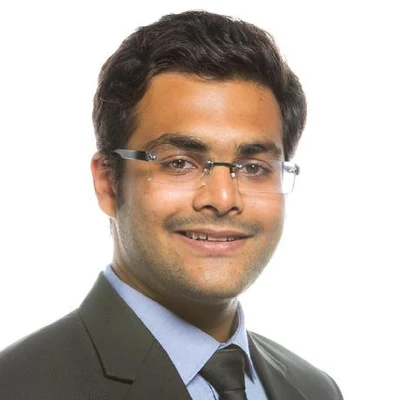
Study Abroad Consultant & Founder @ Analyticall Chefs | Visiting Analytics Faculty at NMIMS | Dual Master's (US)
Sarvagya Tongia is the Founder and Director of Analyticall Chefs, and a Visiting Faculty member at NMIMS teaching Business and Marketing Analytics. He holds a Dual Master's Degree in Finance and Information Technology & Management from the University of Texas at Dallas (UTD). With extensive international corporate experience working as a data and financial analyst in the United States, Sarvagya brings a rigorous, application-first philosophy to modern education.
Through Analyticall Chefs, he is dedicated to eliminating the traditional gaps in the education system by combining elite foreign education consulting with an intensive skills accelerator. His methodology focuses on transforming students and professionals into high-value, execution-ready assets equipped with the exact technical stack, communication mastery, and strategic frameworks needed to thrive globally.
How to Write a Winning SOP for MS Abroad in 2026: Structure, Real Examples & Technical Alignment
Academic CV Format for MS in US: How to Build an ATS-Standard Profile for 2026 Admissions
Launch Your Tuition-Free German Master Journey
Do not let complex ECTS requirements or APS certification barriers derail your European ambitions. Schedule an in-person consultation with the technical admissions advisors at Analyticall Chefs in Indore today.
Book an In-Person Profile Audit