

If you are an Indian graduate planning a master's abroad in 2026, you have probably hit the same question most of our students hit: MSBA vs Data Science. Both sound like safe bets. Both promise data jobs and strong salaries. So which one is actually right for you?
We hear this almost every week at our Indore office. A B.Com student wants to know if Data Science is out of reach. A B.Tech student worries that an MSBA is too "soft" to be worth the fees. Parents ask which degree will clear a ₹40 to ₹60 Lakh education loan faster. These are fair questions, and the honest answer depends on you, not on a university brochure.
Many agents treat the two degrees as the same thing and push whichever university pays them the best commission. That is not how we work. In this guide, we compare both degrees the way a senior would explain it over chai: what you will study, which jobs you can land, how much you can earn in rupees, and whether your course qualifies for the 3-year STEM OPT in the US.
In This Guide
6 Key Chapters - Tap to Jump or Collapse
In This Guide
6 Key Chapters - Tap to Jump or Collapse
Quick Answer
MSBA vs Data Science comes down to business strategy versus algorithm building. An MSBA trains you in SQL, Power BI and decision making, with US starting pay of about ₹80 Lakh to ₹1.1 Crore a year. An MSDS trains you in Python, machine learning and big data, paying about ₹98 Lakh to ₹1.35 Crore.
Core Definitions: MSBA vs Data Science Explained
An MSBA focuses on commercial metrics and business intelligence for corporate leadership. An MSDS focuses on mathematical algorithms, neural networks and distributed computer science.
To choose between these two academic pathways, you must first understand the fundamental philosophical divergence between business intelligence and algorithmic data science. Both programs manipulate data, but their operational goals, daily activities and evaluation benchmarks belong to separate professional spheres.
A Master of Science in Business Analytics (MSBA) bridges the communication gap between technical data engineering teams and corporate executive leadership. As a business analytics professional, your primary objective is asking commercial questions: Why did European revenue drop 14% last quarter? Which customer acquisition channel delivers the highest lifetime return? How should inventory be positioned across supply hubs to minimize holding costs? You answer these inquiries by querying relational databases using SQL, building automated dashboards in Power BI and presenting recommendations to board members.
Conversely, a Master of Science in Data Science (MSDS) treats data as raw mathematical input for software engineering systems. The data scientist develops predictive algorithms, optimizes statistical neural networks and builds production-grade software microservices. While the business analyst explains what happened and advises what management should do next, the data scientist writes low-level Python, C++ or Scala code to automate high-velocity decisions across millions of real-time server requests.
Commercial Insight & Strategy
Housed in top business schools, prioritizing descriptive analytics, relational databases, financial modeling and visual executive storytelling.
Algorithmic Math & Computing
Housed in engineering and computer science departments, emphasizing multivariable calculus, linear algebra, deep learning and cloud pipelines.
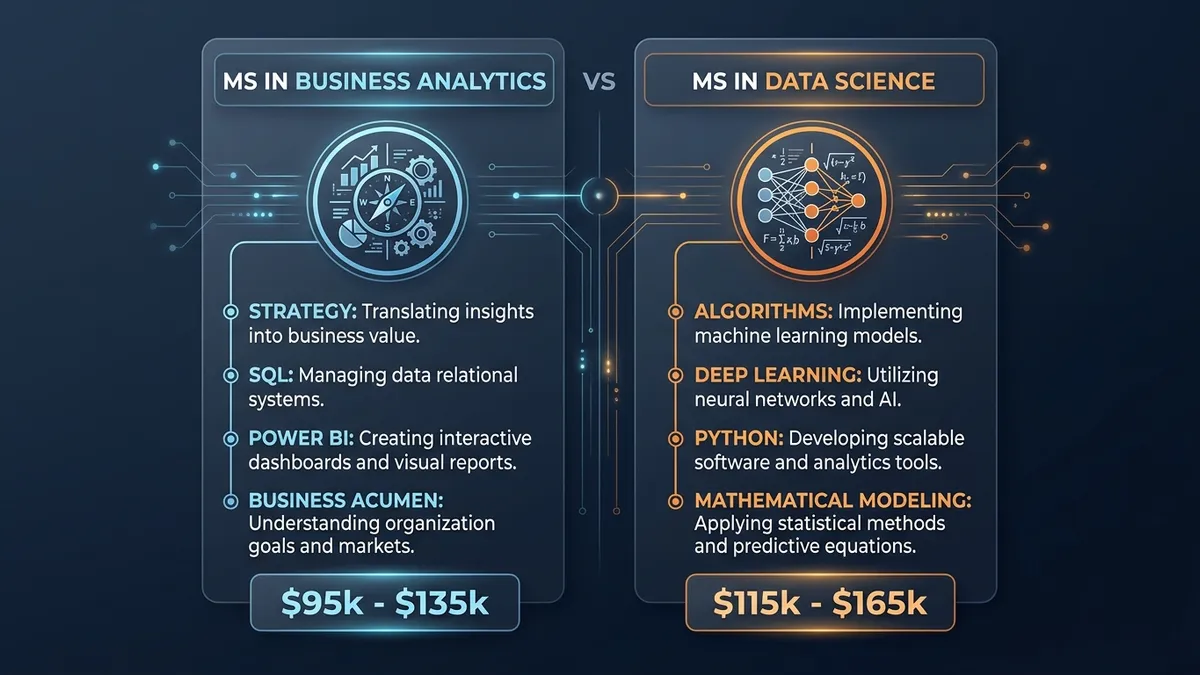
Figure 1: Core distinction matrix between MSBA commercial strategy and MSDS technical modeling paradigms.
Curriculum Architecture & Academic Prerequisites
MSBA splits coursework between business strategy, SQL and applied statistics over 10 to 16 months. MSDS demands advanced calculus, linear algebra, algorithms and cloud infrastructure over 18 to 24 months.
The difference in academic structure between business analytics and data science is evident when inspecting the respective graduate course catalogs of premier foreign universities like MIT Sloan, UT Austin McCombs, Carnegie Mellon and Columbia University. Prospective applicants must inspect module syllabi to evaluate whether their undergraduate background aligns with faculty admission thresholds.
An MS in Business Analytics abroad curriculum balances quantitative techniques with managerial decision science. A typical 30 to 36 credit hour degree structure allocates approximately 40% of coursework to data architecture (SQL, data warehousing, cloud analytics), 30% to predictive statistical modeling (regression, classification, time-series forecasting in Python or R), and 30% to business domain applications such as supply chain analytics, customer lifetime value modeling, marketing attribution and managerial finance.
In contrast, a Master of Science in Data Science curriculum is mathematical and computational. Up to 80% of coursework focuses on computer science foundations and advanced mathematical theory. Students complete rigorous modules in linear algebra, multivariable optimization, probabilistic graphical models, distributed computing with Spark, deep neural network architectures and natural language processing.
| Evaluation Parameter | MS in Business Analytics | MS in Data Science |
|---|---|---|
| Host Department | Business School (e.g., Sloan, McCombs, Tepper) | Computer Science or Engineering Faculty |
| Math Requirements | Introductory Calculus, Basic Applied Statistics | Multivariable Calculus, Linear Algebra, Probability |
| Coding Depth | Applied scripting (SQL, Power BI, Python/R) | Advanced algorithms, data structures, C++, Scala |
| Program Duration | 10 to 16 Months (Accelerated Business Pace) | 18 to 24 Months (Research or Thesis Capstone) |
| Capstone Focus | Corporate consulting project with industry sponsor | Algorithmic thesis or scalable production model |
Indian students holding Bachelor of Engineering (B.E. or B.Tech) degrees in Computer Science or Electronics generally satisfy the prerequisite criteria for either program. However, students graduating with degrees in Mechanical, Civil, Chemical, Commerce (B.Com) or Business Administration (BBA) face strict rejection when targeting top-tier Data Science programs due to missing university math credits. For these candidates, an MSBA represents the optimal transition pathway, providing STEM benefits and quantitative career positioning without the prerequisite barrier.
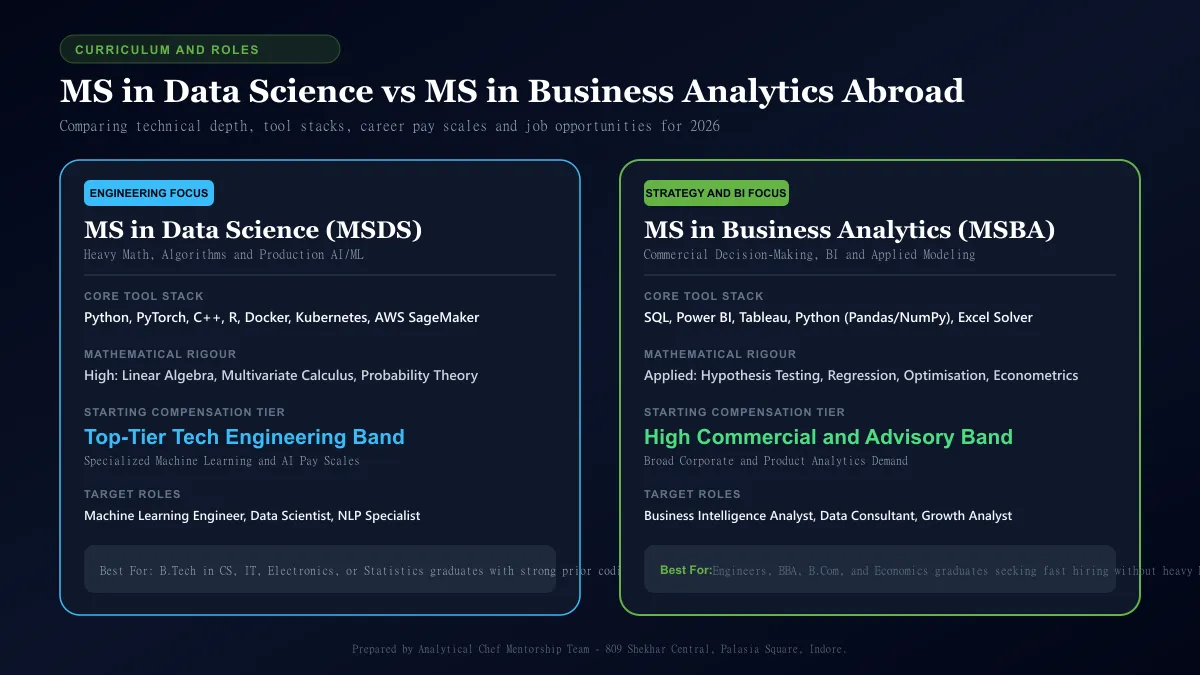
Figure 2: Professional industry mapping from graduate studies into tech, financial and consulting sectors.
Salary Comparison: Starting Compensation & Career Titles
In the US, MSBA roles start between ₹80 Lakh and ₹1.1 Crore a year. MSDS roles start higher at ₹98 Lakh to ₹1.35 Crore a year. Over five years, business analysts often close the gap by moving into executive product and strategy leadership.
Evaluating business analytics vs data science salary benchmarks requires analyzing official labor reports and university placement outcomes. According to the United States Bureau of Labor Statistics and university career statistics, both specializations occupy upper-tier compensation percentiles, though their compensation curves diverge over time.
For graduates of top-50 US business analytics programs, starting base pay in 2026 usually sits between ₹80 Lakh and ₹1.1 Crore a year. Typical first jobs include Business Intelligence Analyst, Analytics Consultant, Supply Chain Analyst and Marketing Analytics Manager. In cities like Seattle, Austin, New York and San Francisco, a joining bonus of ₹8.5 to ₹21 Lakh plus company stock often pushes the first-year package past ₹1.15 Crore.
Data Science graduates start a step higher, usually between ₹98 Lakh and ₹1.35 Crore a year. Common titles are Machine Learning Engineer, Applied Data Scientist and Quantitative Research Analyst. The extra pay comes down to scarcity. Not many people can train custom AI models, build large data pipelines and run them in live production systems.
| Career Specialization | Target Job Titles | US Starting Salary (INR / year) | Europe / UK Salary (INR / year) |
|---|---|---|---|
| Business Analytics | BI Developer, Business Analyst, Growth Lead | ₹80 Lakh - ₹98 Lakh | ₹55 Lakh - ₹66 Lakh |
| Strategy Analytics | Analytics Consultant (McKinsey, Deloitte, BCG) | ₹89 Lakh - ₹1.1 Crore | ₹62 Lakh - ₹78 Lakh |
| Applied Data Science | Data Scientist, Statistical Research Scientist | ₹98 Lakh - ₹1.15 Crore | ₹65 Lakh - ₹81 Lakh |
| Machine Learning | ML Engineer, NLP Engineer, MLOps Specialist | ₹1.06 Crore - ₹1.35 Crore | ₹71 Lakh - ₹90 Lakh |
A quick note on these numbers. We have converted every salary at roughly ₹85 per US dollar and ₹95 per Euro, so you can compare it directly with your loan amount and family budget. Keep in mind that rent, food and travel abroad are also paid in dollars or euros. A ₹1 Crore salary in New York does not stretch the way ₹1 Crore would in Indore.
Yes, Data Science graduates start 15% to 20% ahead. But many business analysts close that gap by year five. Why? They work close to revenue, product and leadership teams. That puts them on a faster track to roles like Director of Analytics or VP of Product, where bonuses and stock make up a big part of total pay.
Is MSBA a STEM Degree? F-1 Visa & 36-Month OPT Rules
Yes, accredited MSBA programs in the US carry official STEM CIP codes (such as 52.1399). This gives international F-1 graduates the standard 12-month OPT plus a 24-month STEM extension, for a total of 36 months of lawful work authorization.
The single most common inquiry from Indian students when comparing business analytics to data science centers on US immigration policy: is MSBA a STEM degree? The short answer is an emphatic yes, provided the university program is formally registered with the United States Immigration and Customs Enforcement (ICE) Student and Exchange Visitor Program (SEVP).
Historically, business school degrees like the traditional Master of Business Administration (MBA) or Master of Management did not qualify for science exemptions. International students were restricted to standard 12-month post-completion Optional Practical Training (OPT). In recent years, top business schools redesigned their curricula around quantitative rigor and filed for official STEM taxonomy reclassification.
Today, reputable universities structure their MS in Business Analytics under federal CIP codes, most notably CIP 52.1399 (Management Science and Quantitative Methods, Other) or CIP 11.0802 (Data Modeling/Warehousing and Database Administration). These designations entitle international F-1 graduates to a 24-month STEM OPT extension beyond the baseline 12 months, delivering a total of 36 months of legal work authorization in the US.
Months 1 to 12: Initial Post-Completion OPT
Begin legal employment in your field of study immediately following graduation under Form I-765 authorization without requiring company visa sponsorship.
Months 13 to 36: 24-Month STEM OPT Extension
File Form I-983 training plan with an E-Verify registered employer to unlock two additional years of work authorization, giving you multiple H-1B lottery attempts.
Three Consecutive H-1B Visa Lottery Filings
A 36-month work window gives Indian graduates three full annual lottery cycles to secure an H-1B work visa, all while you keep earning a full US salary.
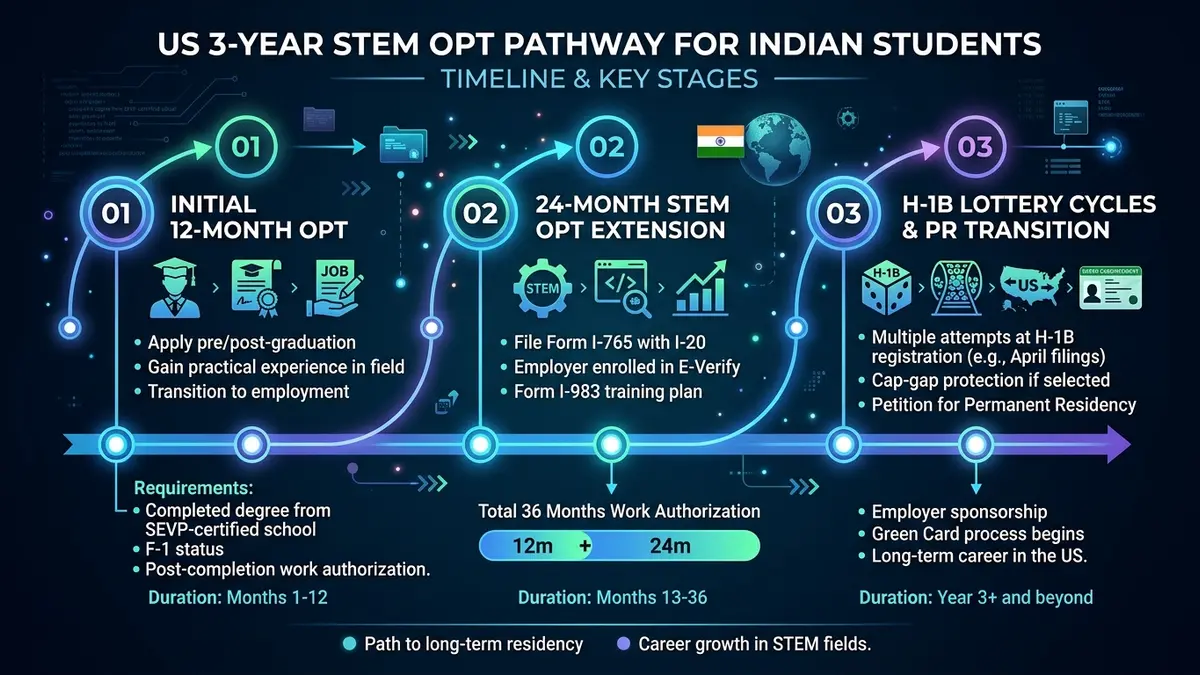
Figure 3: Strategic timeline illustrating the 36-month US STEM OPT work authorization and residency progression.
Before accepting an admission offer, always verify the Form I-20 document issued by the university international student office. The CIP code printed on page 1 of your I-20 determines your STEM eligibility. At Analyticall Chefs, our admissions advisors perform prerequisite checks on institutional accreditation and CIP designations before recommending any overseas program.
Essential Technical Tool Stack: Power BI, SQL & Python
MSBA candidates must master SQL for database queries, Power BI for dashboards, Python for exploratory modeling and business case analysis to win campus assistantships and corporate internships early.
Mastering modern software tools represents the key differentiator between students who secure early on-campus graduate assistantships and those who face academic struggle. Knowing the precise skills for MS in Business Analytics ensures that you land abroad with immediate competitive advantages over global peers.
In business analytics programs, the technical tool stack is practical, commercial and data-driven. The core competencies center on four fundamental pillars:
Relational Databases & Advanced SQL
Proficiency in window functions, recursive CTEs, complex table joins and query optimization across PostgreSQL, MySQL and Snowflake warehouse environments.
Power BI & Interactive Dashboards
Building automated data models using Power Query, DAX calculations and interactive visual reports that answer senior management questions in real time.
Python for Data Analysis
Cleaning dirty datasets using pandas, conducting exploratory data analysis with seaborn and building regression or classification models using scikit-learn.
Business Case Analysis
Translating data tables into executive recommendations, conducting unit economics breakdowns and authoring professional memos for board presentations.
Candidates targeting an MS in Data Science must expand this foundational layer with deeper software engineering tools. MSDS students write modular object-oriented code, utilize Git for version control, containerize models via Docker, train deep learning architectures in PyTorch or TensorFlow, and deploy distributed machine learning workloads across Apache Spark and Amazon Web Services (AWS).
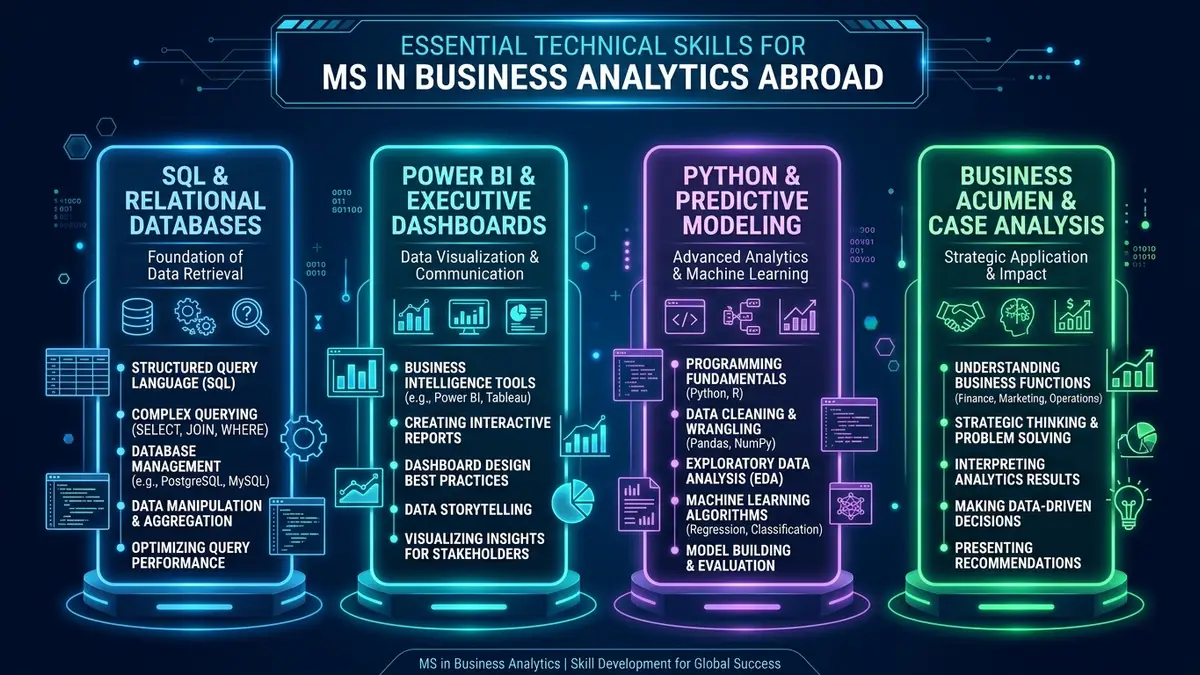
Figure 4: The 4-tiered technical skill framework essential for graduate analytics coursework readiness.
Through our specialized Power BI and SQL for business analytics bootcamps in Indore, students master these exact technologies before boarding their international flight. This preparation ensures you arrive with a live GitHub portfolio, enabling you to secure teaching assistantships or corporate co-ops during your first semester.
Decision Framework: Which Master Degree Fits You Best?
Pick MSBA if your undergraduate is in Commerce, BBA or Core Engineering and you target product, strategy and analytics roles. Pick MSDS if you have deep mathematical credits and aim for machine learning engineering.
When determining MSBA vs MSDS which is better, there is no generic answer. The optimal choice depends directly on your undergraduate coursework, mathematical comfort level, programming enthusiasm and long-term career ambition. Use this practical decision checklist to guide your application strategy:
Choose MS in Business Analytics If:
- ✓ Your undergraduate degree is in Commerce, BBA, Economics, Mechanical or Civil Engineering.
- ✓ You enjoy solving practical business problems and presenting insights to non-technical stakeholders.
- ✓ You prefer writing SQL queries and building interactive dashboards over tuning low-level machine learning hyperparameters.
- ✓ You want an accelerated 10 to 16 month degree with an intense, practical return on investment.
- ✓ Your long-term objective is stepping into executive product, strategy or general management roles.
Choose MS in Data Science If:
- ✓ Your undergraduate degree is in Computer Science, Mathematics, Statistics or Electronics.
- ✓ You possess documented university transcript credits in multivariable calculus and linear algebra.
- ✓ You are passionate about coding complex software systems and developing new algorithmic models.
- ✓ You prefer building backend machine learning pipelines over presenting visual decks to clients.
- ✓ Your career goal is working as a Machine Learning Engineer or Quantitative Research Scientist.
Regardless of which degree you choose, admission committees evaluate your statement of purpose and profile through a technical lens. Demonstrating hands-on project execution, verified code repositories and clear research alignment with faculty laboratories will separate your dossier from thousands of generic applicants worldwide.
The 4-Pillar Career Copilot Methodology at Analyticall Chefs
How our Indore counseling team transforms study abroad aspirants into high-earning global professionals.
Prerequisite Audit & STEM CIP Verification
We review your complete academic transcripts line by line, evaluating mathematical credits and confirming official SEVP STEM classification codes to secure your 3-year OPT work eligibility.
Outcome: Zero risk of non-STEM visa traps and total alignment with university admissions committee prerequisite standards.
Hands-on Technical Bootcamp in Indore
Students master real-world tools including PostgreSQL, Microsoft Power BI and Python data analysis in our offline training labs at Palasia Square before stepping foot on foreign campuses.
Outcome: A verified GitHub portfolio that impresses university professors and unlocks on-campus graduate assistantships early.
Faculty-Aligned Research SOP Architecture
Our mentors guide the creation of custom, research-aligned statements of purpose referencing specific faculty publications and departmental laboratories without robotic AI syntax.
Outcome: Compelling statements of purpose that pass strict plagiarism screening and command top-tier scholarship awards.
Career Copilot & Post-Landing Mentorship
Our support extends far beyond receiving your entry visa. We assist with American ATS resume formatting, LinkedIn networking outreach and mock technical interviews for summer internships.
Outcome: Faster conversion of university internships into six-figure corporate employment across leading global technology hubs.
Build Your Data Career Roadmap at Analyticall Chefs
Do not leave your graduate study investment to guesswork. At Analyticall Chefs, based at 809 Shekhar Central, Palasia Square, Indore, our counselors specialize in unbiased, zero-commission university shortlisting, transcript audits and hands-on pre-departure technical skills training. Book your individual profile consultation today.
FAQ's
Direct, data-backed answers on MSBA vs Data Science curriculum, STEM OPT rules, starting salaries and profile readiness.
Is MS in Business Analytics (MSBA) considered a STEM degree in the United States?
Yes, the vast majority of MS in Business Analytics programs in the United States are officially classified as STEM-designated degree programs under CIP codes such as 52.1399 (Management Science and Quantitative Methods) or 11.0802 (Data Modeling/Warehousing and Database Administration). This classification allows international graduates on an F-1 student visa to qualify for the 24-month STEM OPT extension, granting a total of 36 months of lawful post-study work authorization without requiring an immediate H-1B visa.
What is the starting salary difference between MSBA and Data Science graduates abroad in 2026?
In the United States, fresh MS in Business Analytics graduates usually start between ₹80 Lakh and ₹1.1 Crore a year in roles like BI Analyst, Analytics Consultant and Product Analyst. MS in Data Science graduates start a little higher, between ₹98 Lakh and ₹1.35 Crore a year, because machine learning and data engineering skills are harder to find. In Germany and the UK, MSBA salaries sit around ₹55 Lakh to ₹78 Lakh, while Data Science salaries range from ₹65 Lakh to ₹90 Lakh. Figures are converted at roughly ₹85 per US dollar and ₹95 per Euro.
Can students from non-engineering or commerce backgrounds pursue MS in Data Science?
Gaining admission to a rigorous MS in Data Science program without a computing or engineering degree is challenging because admissions committees demand documented undergraduate university credits in multivariate calculus, linear algebra, discrete mathematics and data structures in Python or C++. Candidates from commerce, economics or business backgrounds find a smoother, highly strategic pathway in MS in Business Analytics, where quantitative aptitude, business domain logic and SQL are prioritized over low-level algorithm design.
Which core technical skills should an Indian student master before starting an MSBA program?
Aspirants targeting MS in Business Analytics degrees should master advanced SQL for relational database querying, Microsoft Power BI or Tableau for interactive business dashboard development, intermediate Python using pandas and NumPy for exploratory data analysis, and advanced Excel for financial modeling. Mastering these four competencies prior to departure prevents academic probation and positions candidates for early graduate assistantships and summer corporate internships.
How does the curriculum of an MSBA compare to an MSDS degree?
An MS in Business Analytics curriculum is typically housed within a university business school and splits coursework evenly between quantitative data modeling and commercial business strategy, covering subjects like predictive customer analytics, supply chain optimization, business intelligence architecture and managerial communication. An MS in Data Science curriculum is managed by computer science or engineering faculties and concentrates heavily on advanced algorithmic machine learning, deep neural networks, natural language processing, cloud infrastructure and big data pipeline engineering.
Where can students in Central India get specialized profile counseling for MSBA and Data Science programs?
Students in Central India can consult Analyticall Chefs at 809 Shekhar Central, Palasia Square, A.B. Road, Indore. The mentorship team provides personalized university shortlisting, academic transcript prerequisite mapping, research-aligned SOP crafting and pre-departure technical bootcamps in SQL, Python and Power BI to help candidates secure admission to top global universities.

Study Abroad Consultant & Founder @ Analyticall Chefs | Visiting Analytics Faculty at NMIMS | Dual Master's (US)
Sarvagya Tongia is the Founder and Director of Analyticall Chefs, and a Visiting Faculty member at NMIMS teaching Business and Marketing Analytics. He holds a Dual Master's Degree in Finance and Information Technology & Management from the University of Texas at Dallas (UTD). With extensive international corporate experience working as a data and financial analyst in the United States, Sarvagya brings a rigorous, application-first philosophy to modern education.
Through Analyticall Chefs, he is dedicated to eliminating the traditional gaps in the education system by combining elite foreign education consulting with an intensive skills accelerator. His methodology focuses on transforming students and professionals into high-value, execution-ready assets equipped with the exact technical stack, communication mastery, and strategic frameworks needed to thrive globally.
How to Secure Graduate Assistantships (RA/TA) Globally: Cold Emailing, Country Comparisons & Pay Scales
Best Country to Study Data Analytics for Indian Students in 2026: Cost, ROI & Work Visas
Launch Your Global Data Analytics Career
Do not let confusion between MSBA and Data Science or non-STEM program codes jeopardize your overseas investment. Schedule an in-person profile audit with our senior mentors in Indore today.
Book an In-Person Profile Audit