

Thousands of ambitious commerce and economics graduates prepare every year for careers in corporate banking and financial consulting. When evaluating the modern scope of business analytics in finance, many candidates mistakenly believe that memorizing accounting entries or learning basic formula lookups guarantees long-term job security. In reality, multinational corporations and investment desks have already automated routine ledger balancing and quarterly variance reconciliations. When mechanical data entry disappears, professionals who understand both financial theory and modern database pipelines capture the most lucrative positions.
The corporate challenge deepens when students rely on traditional advice from commercial recruiters. Commission agencies routinely push applicants into generic finance degrees with outdated curricula simply because those institutions pay placement fees. Thriving in an international corporate environment requires practical capability in structured database querying, dynamic three-statement modeling and executive business intelligence.
This industry guide provides an honest examination of the financial analytics sector for 2027. You will discover audited compensation figures across five premier global markets, contrast fragile spreadsheets with modern database workflows and explore five strategic career steps designed to establish lasting professional value.
In This Advisory Guide
Finance & Analytics Reality Check for Graduate Aspirants
In This Advisory Guide
Finance & Analytics Reality Check for Graduate Aspirants
The Reality of Business Analytics in Finance: Breaking Down the 2027 Industry Shift
Corporate finance is undergoing a permanent transformation. The days when an analyst spent two weeks copying general ledger numbers into desktop spreadsheets are over. Understanding the current function of business analytics in finance requires acknowledging that automated systems now perform journal entries and basic variance reports in seconds.
Chief financial officers no longer hire graduates merely to assemble static monthly reports. Modern finance teams expect analysts to uncover why margins compressed in a specific territory, how changes in interest rates impact debt covenants and where capital investments yield the highest returns. When routine accounting processes are automated, corporate value shifts toward strategic interpretation.
Consider two young professionals entering an international treasury office. The first candidate holds an accounting degree and prepares balance sheet summaries by hand. When leadership requests an evaluation of inflation scenarios, he requires four days to reconstruct his workbook formulas.
The second candidate studied commercial finance while building practical capability in database queries and dashboard modeling. She connects directly to ERP tables, builds an interactive working capital simulator and delivers five sensitivity outcomes within two hours. Her analysis immediately shapes executive capital decisions.
This operational divergence influences hiring across corporate treasuries, private equity firms and fintech platforms. Modern business teams value analysts who understand how currency movements affect production contracts in overseas factories, how working capital cycles shift with customer payment terms and how balance sheet liquidity protects companies during market downturns.
This shift explains why leading business faculties and corporate finance departments demand quantitative capabilities alongside financial theory. The following comparison highlights how daily responsibilities diverge between routine accounting operations and modern analytical finance:
| Operational Area | Traditional Accounting | Modern Analytical Finance | Strategic Advantage |
|---|---|---|---|
| Primary Orientation | Historical book closing and GAAP filing | Forward-looking capital allocation | Predictive decision support |
| Primary Data Source | Static monthly trial balance extracts | Live transactional databases via SQL | Real-time liquidity visibility |
| Core Computing Stack | Manual spreadsheets with copied values | Power BI DAX, dynamic Excel, Python | Automated recurring workflows |
| Executive Influence | Delivers backward-looking reports | Advises board on investment trade-offs | Direct participation in strategy |
| Career Vulnerability | High risk from robotic automation | Resilient across market cycles | Sustained corporate demand |
Traditional study abroad agencies rarely explain these operational differences. Because their income depends on placement fees from partner schools, commercial counselors steer applicants toward generic courses that lack modern computational components. This misdirection leaves graduates unprepared for contemporary workplace demands.
The Analyticall Chefs Anti-Agent Standard
At Analyticall Chefs, we operate on a strict Anti-Agent model with zero university tie-ups and zero commissions. Our guidance is 100% unbiased, focusing entirely on rigorous profile transformation so students earn admission into the world's best universities on their own merit. We help commerce and finance graduates target reputable faculties with strong analytics integration across the US, UK, Germany, Canada and Australia.
The Core Divergence: Financial Analytics vs Business Analytics in Practice
Many students and early-career analysts use these industry titles interchangeably. However, examining financial analytics vs business analytics reveals distinct responsibilities, analytical timelines and corporate reporting chains.
Financial analytics centers on accounting accuracy, balance reconciliation, tax planning and statutory reporting. The primary objective is confirming that published books accurately reflect past commercial transactions. Its practitioners verify compliance with regulatory authorities and international financial standards.
Business analytics in corporate finance takes historical ledger data as a starting foundation rather than a conclusion. It combines financial figures with operational indicators such as customer retention rates, inventory lead times, supply chain disruptions and marketing acquisition costs. The primary goal is discovering actionable patterns that improve enterprise profitability.
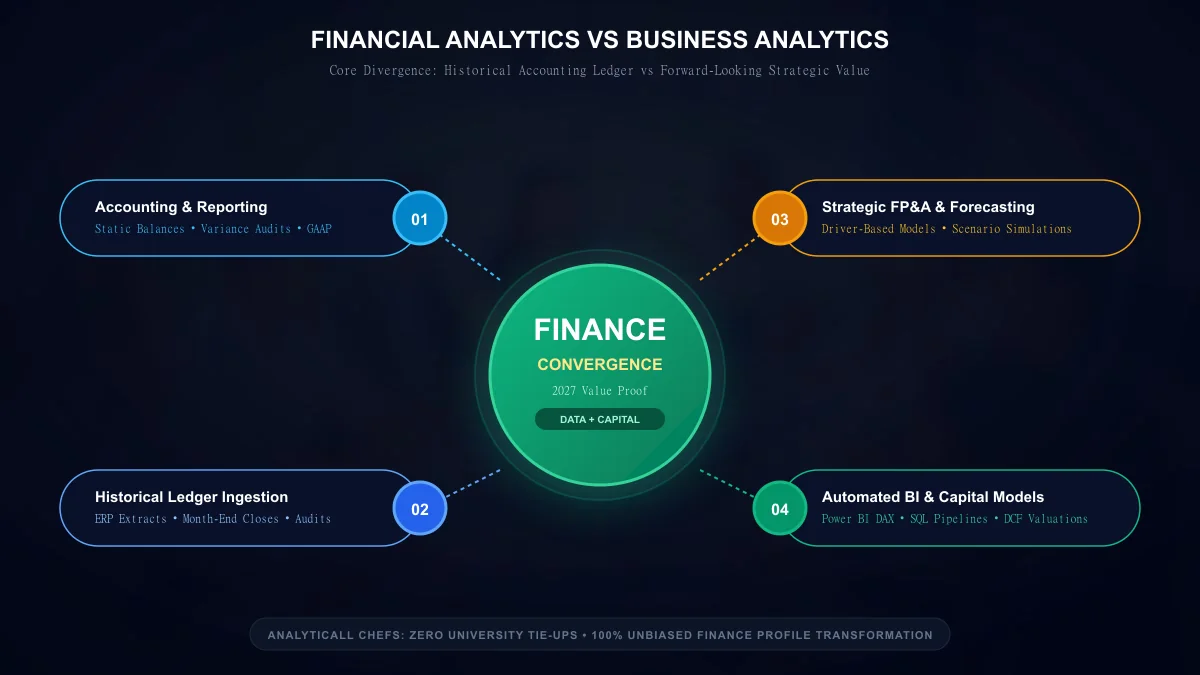
Figure 1: Core Divergence: Historical Accounting Ledger vs Forward-Looking Strategic Value.
Consider an international manufacturing firm evaluating whether to construct a distribution warehouse in Europe. A traditional financial analyst calculates past building depreciation and records historical transit bills. A commercial business analyst models regional logistics routes, projects currency fluctuations and forecasts internal rates of return under multiple freight pricing scenarios.
This multidisciplinary bridge connects finance with other commercial functions. Corporate recruiters value finance graduates who understand how accounting entries connect to operational logistics, marketing efficiency and workforce productivity. Completing structured financial modeling training enables students to evaluate complex corporate initiatives and deliver actionable recommendations to executive leadership.
In commercial banking, for example, loan underwriters evaluate historical balance sheets to verify existing collateral. Concurrently, business analysts build predictive credit models examining real-time cash flow velocity and vendor payment patterns. This predictive approach identifies solvency risks months before traditional accounting audits capture payment defaults.
When business graduates master both monetary accounting and quantitative data analysis, they qualify for strategic finance and corporate development roles. These positions enjoy direct visibility with leadership and offer accelerated professional trajectories.
Salary Truths: 2027 Compensation Benchmarks Across Five Global Hubs
Compensation in commercial finance correlates directly with technical capability. Graduates who combine commercial understanding with database proficiency command substantial salary premiums over peers limited to manual spreadsheet entry. Reviewing global employment data reveals consistent demand across major international financial markets.
In international hiring corridors, the average FP&A business analyst salary reflects the strategic value of predictive planning. In the United States, corporate financial planning and analysis analysts who manage database pipelines and dynamic models routinely earn starting base salaries between $105,000 and $145,000. These positions frequently qualify for 36-month STEM OPT work authorizations, allowing international graduates extended periods to build international careers.
American financial centers such as New York, Chicago, Dallas and San Francisco face acute shortages of candidates who bridge corporate accounting and business intelligence. Technology firms, healthcare networks and manufacturing conglomerates offer competitive signing bonuses and equity incentives to analysts capable of automating executive cash forecasts.
Similar compensation trends exist in the United Kingdom, Germany, Canada and Australia. In London, corporate finance analysts proficient in business intelligence earn between £62,000 and £88,000 under the two-year Graduate Route visa. In Germany, where public universities charge virtually zero tuition fees, commercial controllers and data specialists command €68,000 to €95,000 in major industrial centers.
Canadian banking institutions across Toronto and Montreal compensate financial systems analysts with starting packages between $92,000 and $125,000 CAD. These professionals benefit from up to three years of post-graduation work authorization through the Post-Graduation Work Permit program. In Australia, fund management analysts and commercial modelers in Sydney and Melbourne earn between $120,000 and $165,000 AUD under Subclass 485 post-study visas.
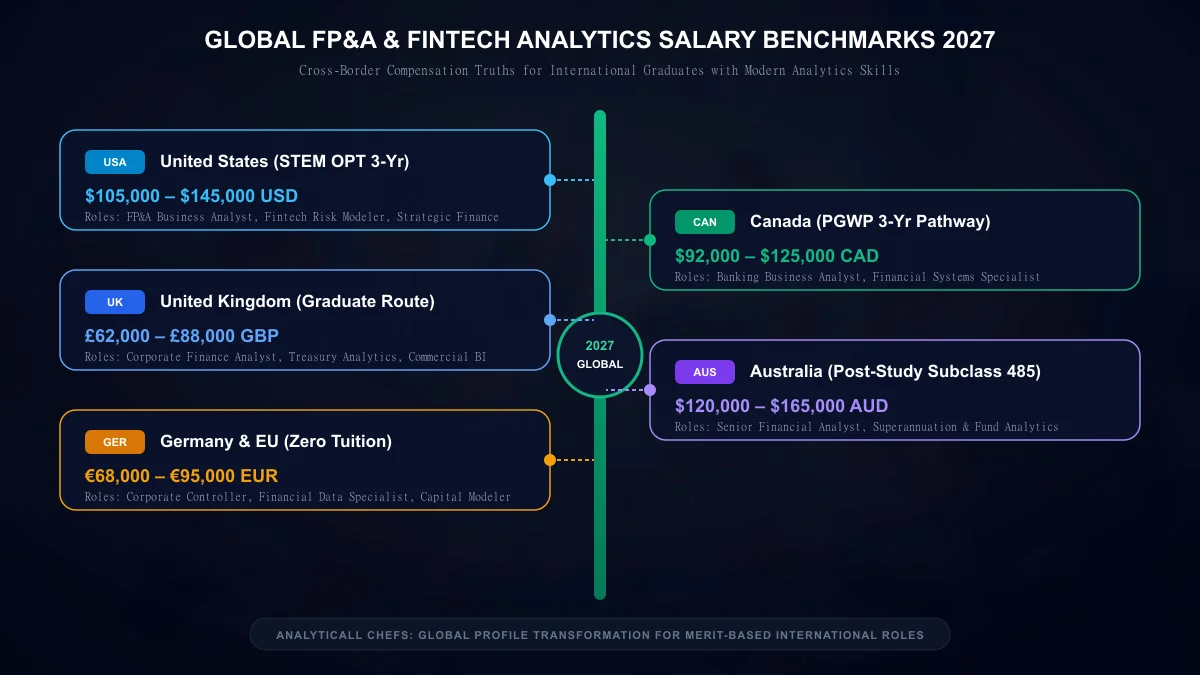
Figure 2: Global Compensation Benchmarks for Financial Analysts with Modern Database and BI Skills.
The following breakdown summarizes audited starting compensation benchmarks and work permit regulations across five leading destinations for business analytics for finance professionals:
| Country & Visa Hub | Work Authorization | Starting Base Salary | In-Demand Job Titles |
|---|---|---|---|
| United States | 36-Month STEM OPT | $105,000 - $145,000 USD | FP&A Business Analyst, Fintech Risk Modeler, Strategic Finance Analyst |
| United Kingdom | 2-Year Graduate Route | £62,000 - £88,000 GBP | Corporate Finance Analyst, Treasury Modeler, Commercial BI Specialist |
| Germany & EU | 18-Month Job Seeker Visa | €68,000 - €95,000 EUR | Corporate Controller, Financial Systems Specialist, Capital Planner |
| Canada | Up to 3-Year PGWP | $92,000 - $125,000 CAD | Banking Business Analyst, FP&A Specialist, Credit Risk Modeler |
| Australia | Subclass 485 Post-Study Visa | $120,000 - $165,000 AUD | Senior Financial Analyst, Superannuation Analyst, Commercial Modeler |
These figures illustrate why evaluating prospective universities on degree return on investment is essential. Rather than restricting applications to a single country or selecting institutions based on promotional brochures, smart applicants compare visa duration, living costs and corporate hiring volume across several international hubs.
Career progression in international corporate finance also demonstrates steep compensation acceleration. Junior analysts who start at $105,000 USD often reach senior financial analyst ranks within two to three years, commanding base packages between $130,000 and $160,000 USD. Transitioning into strategic finance manager or director of FP&A positions within six years yields compensation exceeding $200,000 USD plus performance bonuses. This accelerated progression rewards professionals who eliminate repetitive reporting friction and enable leadership teams to allocate capital with clarity.
Modern Financial Modeling with Power BI and SQL: The Technical Pipeline
Many business graduates wonder what tools actually matter in modern finance departments. Mastering financial modeling with Power BI and SQL represents the essential technical bridge between raw transaction databases and executive strategy discussions.
Traditional financial modeling often suffered from significant structural vulnerabilities. Analysts created vast workbooks containing dozens of worksheets linked through complex manual cell formulas. A single accidental edit or circular reference could corrupt an entire valuation model, creating substantial compliance and investment hazards.
Modern corporate financial modeling replaces fragile workbooks with an automated data pipeline. First, analysts write targeted queries in SQL to extract general ledger entries, customer payment histories and inventory accounts directly from relational databases. This step eliminates tedious manual data preparation.
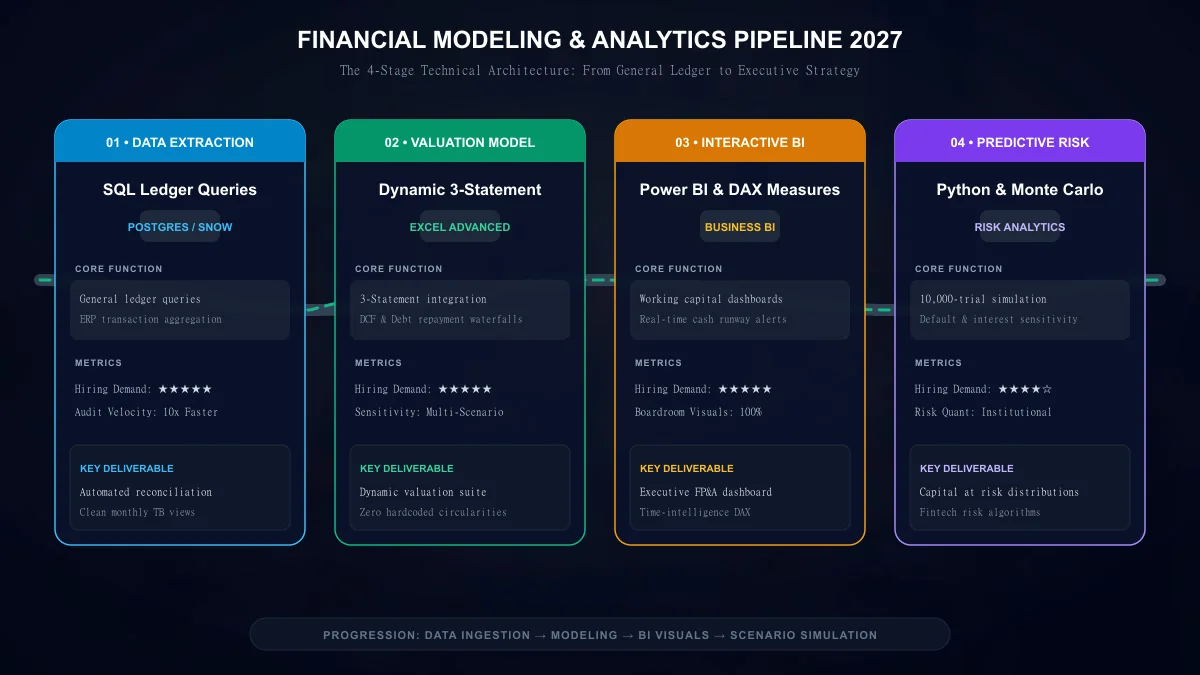
Figure 3: Modern 4-Stage Financial Architecture: From Data Ingestion to Predictive Modeling.
Next, the extracted data feeds into clean three-statement models where income statements, balance sheets and cash flow schedules interact dynamically. Analysts apply discounted cash flow techniques and debt repayment waterfalls without hardcoded circular dependencies. Acquiring professional SQL database skills allows students to handle millions of enterprise records without performance delays.
In high-volume treasury departments, writing efficient SQL queries cuts data preparation time from days to minutes. Analysts query transaction tables using aggregate grouping, window functions and conditional joins to isolate unpaid invoices and unusual ledger entries. This automated ingestion provides reliable data for valuation models.
Finally, analysts connect their mathematical models to business intelligence platforms. Using Power BI and advanced DAX measures, they build real-time visual dashboards that display working capital metrics, days sales outstanding and debt covenant compliance. For specialized fintech or risk roles, Python scripts run Monte Carlo simulations across ten thousand randomized scenarios to stress-test corporate solvency.
Review this operational comparison detailing the transition from fragile spreadsheets to automated financial systems:
| Stage | Legacy Manual Method | Modern Database Architecture | Measurable Impact |
|---|---|---|---|
| Data Ingestion | Manual CSV exports from ERP into scattered desktop spreadsheets | Direct SQL pipelines querying relational databases and cloud lakes | 90% reduction in prep time |
| Three-Statement Integration | Hardcoded cell links prone to circular reference crashes | Dynamic mathematical model linking balance sheet to cash flows | Instant multi-scenario updates |
| Variance & Ratio Analysis | Static tables delivered three weeks after month-end close | Automated Power BI DAX cards updating daily with ERP transactions | Real-time decision capability |
| Risk & Stress Testing | Basic best, base and worst case three-scenario switchboard | Python Monte Carlo simulation running 10,000 randomized trials | Comprehensive distribution curve |
Understanding enterprise database schemas provides a distinct operational advantage during corporate recruitment rounds. Rather than waiting for IT teams to prepare custom reporting views, analytical finance professionals write targeted SQL queries against transactional tables such as general ledger headers, journal lines and customer receipt accounts. For instance, querying accounts receivable ledger entries with date-partitioned window functions identifies overdue payment aging patterns instantly. Integrating these SQL queries directly into Power BI dashboards equips chief financial officers with live days sales outstanding tracking and immediate liquidity visibility.
Developing this modern toolkit constitutes the definitive skills for financial analyst 2027 hiring benchmarks. Corporate finance managers seek candidates who demonstrate competence across the complete pipeline, from database extraction to boardroom presentation.
5 Strategic Career Suggestions for Finance Professionals in 2027
Transitioning from traditional accounting into strategic analytics requires deliberate planning. Whether you are completing an undergraduate degree in Indore or working as an early-career accountant, these five actionable suggestions provide a structured progression toward high-paying international finance positions:
Building an institutional modeling foundation requires practical project execution rather than passive video lectures. When constructing valuation models, ensure your income statement, balance sheet and cash flow statement link through dynamic formulas rather than static values. Build dedicated working capital schedules for receivables, inventory and payables. Incorporate dynamic debt schedules featuring repayment waterfalls, cash sweeps and circularity breaker switches. This mathematical rigor proves to investment committees and university admissions panels that you possess institutional modeling capability.
Suggestion 01: Build Dynamic Three-Statement Valuation Models
Move beyond static classroom balance sheets. Build interconnected income statements, cash flow statements and balance sheets in Excel with dynamic debt waterfalls and sensitivity tables.
Suggestion 02: Master Direct SQL General Ledger Extraction
Eliminate manual CSV downloads and fragile VLOOKUP formulas. Write production SQL queries that extract, filter and reconcile transactional general ledger data directly from enterprise database tables.
Suggestion 03: Develop Executive Power BI Working Capital Dashboards
Convert accounting schedules into interactive business intelligence cockpits. Use advanced DAX measures to track cash conversion cycles, liquidity ratios and revenue churn in real time.
Suggestion 04: Target Strategic Finance, FP&A and Fintech Corridors
Focus your post-graduation job hunt on strategic financial planning and analysis, treasury intelligence, corporate development and fintech credit risk, where analytical modeling commands premium compensation.
Suggestion 05: Secure Unbiased Multi-Country Admissions on Merit
Partner with zero-commission mentors to evaluate top universities across the US, UK, Germany, Canada and Australia based purely on curriculum quality, STEM designations and return on investment.
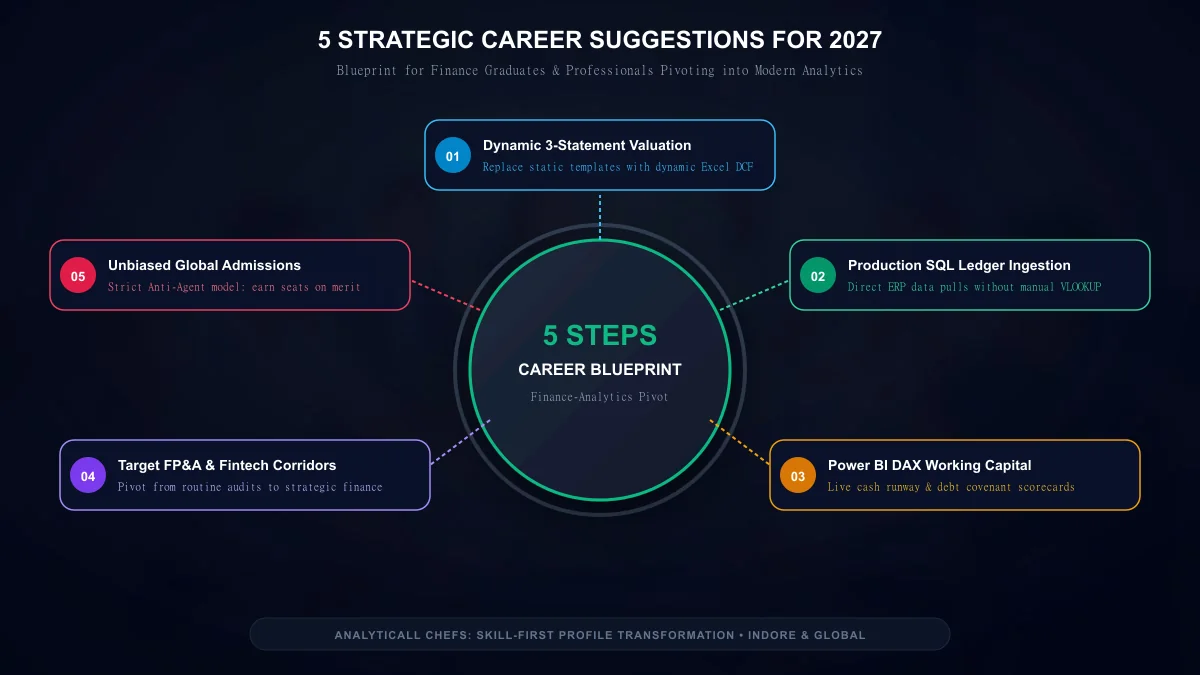
Figure 4: Career Transformation Blueprint: 5 Strategic Steps for Finance Graduates.
This sequential framework forms the foundation of a modern fintech analytics career roadmap. When evaluating whether is business analytics good for finance students, the answer depends entirely on practical execution. Students who build dynamic portfolio projects and publish their models demonstrate immediate competence to admissions boards and prospective employers alike.
These analytical capabilities also support adjacent business disciplines. Professionals in corporate accounting use database queries to conduct continuous audit reconciliations. Supply chain managers model working capital constraints across regional warehouses. Human resource directors project compensation band structures and forecast workforce turnover costs.
By mastering versatile data extraction and modeling skills, business graduates maintain broad career flexibility. They avoid being trapped in narrow clerical functions and position themselves for leadership roles across corporate finance, management consulting and technology operations.
Pre-Departure Training & The Indore Analytics Experience Center
Earning an offer from a top international university is an exciting milestone, but succeeding in demanding graduate seminars is where true academic value is determined. International business schools expect admitted students to begin coursework with working knowledge of data aggregation and modeling tools.
At our Indore experience center, Analyticall Chefs finance analytics training Indore cohorts work through twelve comprehensive corporate case studies prior to international departure. Students work directly with real corporate filings, extract transaction records using SQL and present their findings in structured boardroom pitch simulations.
This hands-on preparation ensures that our students arrive on campus confident and prepared. While peers struggle with basic software installations during their first semester, Analyticall Chefs candidates secure competitive research assistantships and excel in early campus recruitment rounds.
Students also refine their professional presentation skills through recorded mock case interviews. They receive line-by-line critiques of their one-page international ATS resumes, ensuring that project impacts follow the Google XYZ formula. Mentors who completed international master degrees guide each student through zero-commission university shortlisting.
Explore our comprehensive business analytics training curriculum to build practical competence before your flight departs.
You can also partner with our skill-first study abroad consulting mentors to build an application portfolio that reflects your genuine academic merit.
Book Your Financial Analytics Profile Audit at Analyticall Chefs in Indore
At Analyticall Chefs, we operate on a strict Anti-Agent model with zero university tie-ups and zero commissions. Our guidance is 100% unbiased, focusing entirely on rigorous profile transformation so students earn admission into the world's best universities on their own merit. Visit us in person at 809 Shekhar Central, Palasia Square, Indore, or schedule an online evaluation session.
Frequently Asked Questions
Direct answers on finance and business analytics careers, global salary benchmarks and zero-commission counseling.
Is business analytics good for finance students targeting global careers in 2027?
Yes, combining business analytics with finance is one of the highest-paying skill pairings in corporate banking, fintech and corporate FP&A. Finance students who master SQL, Power BI DAX and corporate valuation transition from routine bookkeeping into high-impact strategic advisory roles.
What is the primary difference between financial analytics and business analytics?
Financial analytics focuses primarily on historical ledger data, GAAP compliance, quarterly variance reviews and backward-looking accounting ratios. Business analytics in finance is forward-looking, using database queries, driver-based forecasting and scenario modeling to guide strategic capital deployment.
What is the average FP&A business analyst salary across major global education hubs?
In the United States, FP&A business analysts earn base salaries between $105,000 and $145,000 under 36-month STEM OPT work permits. In the United Kingdom, base compensation ranges from £62,000 to £88,000, in Germany from €68,000 to €95,000, in Canada from $92,000 to $125,000 CAD and in Australia from $120,000 to $165,000 AUD.
Why should finance graduates avoid commercial commission agents for global university admissions?
Traditional study abroad agents earn referral commissions only by placing students into partner colleges, regardless of program quality or career returns. At Analyticall Chefs, we operate on a strict Anti-Agent model with zero university tie-ups and zero commissions. Our guidance is 100% unbiased, focusing entirely on rigorous profile transformation so students earn admission into the world's best universities on their own merit.
Which core tools replace traditional static spreadsheets in modern corporate finance?
Modern corporate finance workflows combine SQL for direct general ledger extraction from ERP platforms, dynamic Excel for discounted cash flow and debt waterfall modeling, Power BI with DAX for live working capital dashboards and Python for Monte Carlo risk simulations.
How does Analyticall Chefs prepare finance students in Indore before departure abroad?
At our Indore center and live online cohorts, students build practical corporate portfolios including three-statement financial models, automated SQL reconciliation flows and interactive Power BI dashboards. Students also receive ATS resume architecture and one-on-one global alumni interview mentoring.

Study Abroad Consultant & Founder @ Analyticall Chefs | Visiting Analytics Faculty at NMIMS | Dual Master's (US)
Sarvagya Tongia is the Founder and Director of Analyticall Chefs, and a Visiting Faculty member at NMIMS teaching Business and Marketing Analytics. He holds a Dual Master's Degree in Finance and Information Technology & Management from the University of Texas at Dallas (UTD). With extensive international corporate experience working as a data and financial analyst in the United States, Sarvagya brings a rigorous, application-first philosophy to modern education.
Through Analyticall Chefs, he is dedicated to eliminating the traditional gaps in the education system by combining elite foreign education consulting with an intensive skills accelerator. His methodology focuses on transforming students and professionals into high-value, execution-ready assets equipped with the exact technical stack, communication mastery, and strategic frameworks needed to thrive globally.
How to Get Into the World's Best Universities in 2027: A 15-Step Admissions Roadmap
Top Analytics Skills to Master for Studying Abroad in 2027: AI-Driven BI & SQL
Advance Your Finance Career on Genuine Merit
Reject commission-driven recruitment shortcuts. Partner with Analyticall Chefs in Indore for 100% unbiased university shortlisting, hands-on financial modeling mentoring and ATS profile architecture across Finance, Accounting, Marketing, Operations and HR.
Book Your Free Profile Evaluation