

Every autumn, thousands of capable Indian graduates receive unexpected rejection letters from top global universities like Columbia, LSE, Imperial, TU Munich, and the University of Toronto. When looking into how to get into top universities abroad, many students assume that an 8.5 CGPA and a strong test score are enough. In reality, admissions committees now review tens of thousands of international files with nearly identical grades. When everyone looks qualified on paper, marks alone rarely win you a seat.
The problem gets worse when families consult commercial study abroad agents. Most traditional agents earn their money through college kickbacks, so they push Indian students into lower-ranked partner colleges instead of helping them build real academic strength. Getting into a truly world-class institution requires concrete proof of what you can build, thoughtful school shortlisting across multiple countries, and an authentic statement of purpose grounded in real work.
This 15-step admissions roadmap shows you exactly how admissions teams evaluate applications for 2027. You will see how students in Finance, Accounting, Marketing, Operations, and HR build practical portfolio projects, select Reach-Target-Safety programs across five global hubs, and submit early to win substantial merit scholarships.
In This 15-Step Roadmap
Practical Merit Guide for Indian Graduate Applicants
In This 15-Step Roadmap
Practical Merit Guide for Indian Graduate Applicants
How to Get Into Top Universities Abroad in 2027 When High Grades Alone Fail
Top global universities reject more than eighty-five percent of candidates who apply with strong grades but no clear proof of practical capability. Understanding how to get into top universities abroad means looking past simple mark sheets. Today, admissions teams place about thirty percent of their decision weight on practical project spikes, twenty percent on an evidence-based Statement of Purpose, twenty percent on quantitative academic background, and the remaining thirty percent on letters of recommendation, interviews, and early timing.
Consider two Indian graduates applying from Indore, Mumbai, or Bengaluru for Fall 2027. The first holds an 8.9 CGPA in B.Com and has three certificates from online courses. He writes his application essay two days before the final deadline. Within eight weeks, LSE, Columbia, TU Munich, and Toronto send polite rejections.
The second student carries a 7.9 CGPA in BBA Finance. However, she has completed three detailed corporate valuation models and shared an interactive Power BI scorecard online. She mentions two specific research labs in her essay and applies in Round One. She receives three top-tier offers along with forty percent merit scholarships.
Admissions committees updated their review guidelines after AI tools made generic essays easy to produce. Acceptance rates at Ivy League, UK Russell Group, German TU9, and Canadian U15 programs now sit well below fifteen percent. To stand out, you need tangible proof of work rather than standard certificates.
Here is how admissions committees across top-fifty Master, MiM, and MBA programs evaluate candidates:
| Evaluation Area | Weight | Common Shortcut | Top 2% Merit Proof |
|---|---|---|---|
| Domain Project Spike | 30% | Basic online course badges | 3 public models on GitHub & NovyPro |
| Academic Background | 20% | Raw college marks only | Course credit mapping + strong quant score |
| Reverse SOP | 20% | AI-written generic essay | Real projects tied to target professors |
| Quantified LORs | 15% | Generic letters praising character | Specific rankings and project impact |
| Interviews & Video | 10% | Memorized answers | Clear explanation of technical choices |
| Round-One Timing | 5% | Applying late in spring | Submitting in September to October |
Most commercial agencies avoid talking about these criteria because top-ranked institutions like Oxford, Columbia, Imperial, TU Munich, and Toronto do not pay agent commissions. When an agency survives on college referral fees, its advice naturally leans toward colleges that pay bonuses rather than programs that give you the strongest long-term return.
The Analyticall Chefs Anti-Agent Standard
At Analyticall Chefs, we operate on a strict Anti-Agent model with zero university tie-ups and zero commissions. Our guidance is 100% unbiased, focusing entirely on rigorous profile transformation so students earn admission into the world's best universities on their own merit. Every shortlist serves your career return across the US, UK, Germany, Canada and Australia.
How to Build an Admissions Spike in Finance, Marketing, HR, and Operations
A domain spike means building deep, verifiable project work in your chosen field rather than collecting random extracurricular certificates. Whether you are applying for Finance, Accounting, Marketing, Operations, or Human Resources, committee members want to see that you can handle real data and business problems from your very first day on campus.
A common misconception among Indian graduates is that only computer science or software engineering students can build impressive portfolios. That belief is incorrect. Global business and management schools do not expect software coding from business graduates. What they look for is focused expertise in your own subject.
When admissions officers have only a few minutes to review your file, ten scattered certificates from student clubs blend into the background. In contrast, three thorough case studies built with real corporate data immediately demonstrate your capability.
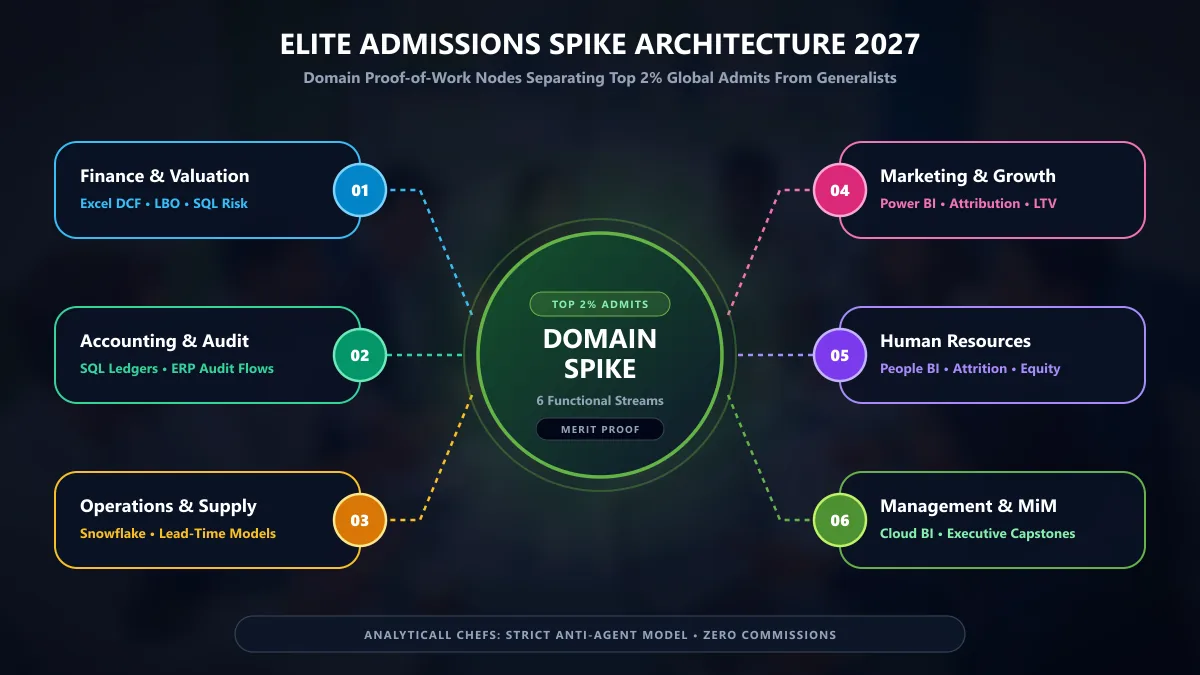
Figure 1: Project Framework across Finance, Accounting, Marketing, Operations, HR and Management.
Effective profile building for top universities directly connects your undergraduate degree to practical business decisions. For example, a B.Com or BBA student who completes structured financial modeling training can build a three-statement discounted cash flow model for a listed firm. When professors review that project, they see an applicant who is prepared for rigorous coursework and corporate recruitment interviews.
Here are six high-impact project tracks across core business disciplines:
3-Statement DCF & LBO Model Suite
Dynamic Excel corporate valuation, sensitivity tables and SQL credit-risk views built on public filings.
SQL Ledger Reconciliation System
Automated Power Query reconciliations, duplicate invoice SQL checks and IFRS compliance trackers.
Customer Lifetime Value Cohort Model
Interactive Power BI and Tableau retention models measuring channel returns across global markets.
Multi-Echelon Inventory Optimizer
Monte Carlo safety-stock simulations, lead-time variance models and route optimization views in Power BI.
Employee Attrition Risk Predictor
Predictive turnover models using logistic regression, salary band equity reviews and workforce dashboards.
Market Entry & Unit Economics Dashboard
Bottom-up TAM forecasting, competitor pricing models and scenario scorecards for leadership decisions.
None of these projects require advanced programming. Each one uses everyday business tools like Excel, SQL, and Power BI alongside sound commercial reasoning. This hands-on preparation shows admissions committees how you can contribute meaningfully to class discussions.
Profile Review and Global University Shortlisting (Steps 1 to 5)
Steps 1 through 5 form the foundation of your admissions strategy, starting twelve months before classes begin. During this period, you review your academic transcripts for credit gaps, compare major study destinations objectively, verify course equivalencies, build a balanced 25-50-25 university shortlist, and identify relevant faculty research groups.
The first phase of our study abroad roadmap 2027 replaces guesswork with clear analysis. Many applicants choose a single destination simply because an acquaintance moved there recently. A stronger approach compares tuition costs, living expenses, post-study work rules, and job markets across several countries first.
Step 01: Complete a Full Academic and Career Gap Review
Benchmark your transcript, quantitative course credits and internships against admitted class profiles twelve months early.
Step 02: Compare Career Returns Across Five Global Hubs
Compare tuition fees, living expenses, work visas and hiring markets across the US, UK, Germany, Canada and Australia.
Step 03: Check Subject Credits, ECTS Rules and Test Waivers
Verify three-year degree acceptance, German ECTS credit requirements, APS timelines and GMAT or GRE waiver rules.
Step 04: Build a 25-50-25 Reach, Target and Safety Matrix
Select eight to ten merit universities split into 25 percent Reach, 50 percent Target and 25 percent high-value Safety options.
Step 05: Identify Target Faculty Labs and Industry Hiring Corridors
Identify two research professors, practical labs and regional employer pipelines at every shortlisted university.
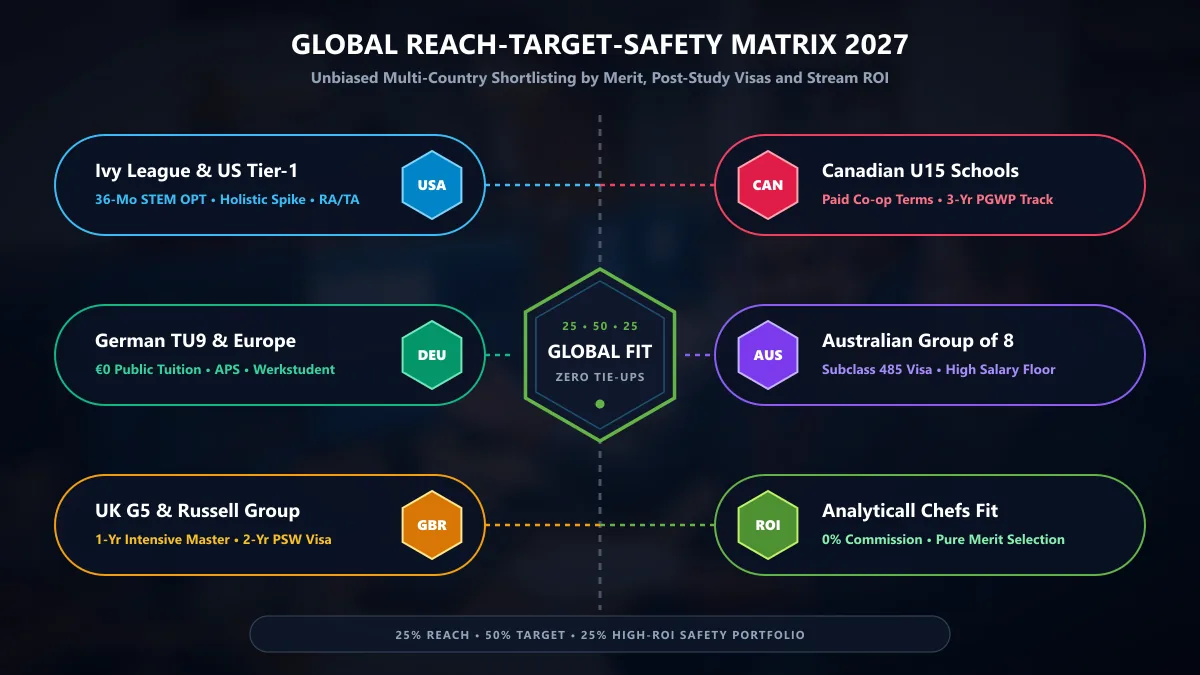
Figure 2: Multi-Country Shortlisting Matrix across the US, Germany, UK, Canada and Australia.
Using a structured university shortlisting reach target safety approach balances high ambitions with sensible planning. If you are exploring how to get admission in Ivy League from India, pairing institutions like Columbia or Cornell with premier faculties in the UK, Germany, Canada, and Australia gives you both prestige and financial security. Working with skill-first study abroad consulting mentors ensures that your university choices match your genuine career goals rather than agent preferences.
Review this comparison of five major study destinations to evaluate your options:
| Country | Top Universities | Strongest Streams | Key Advantages |
|---|---|---|---|
| United States | Columbia, MIT Sloan, Duke, UT Dallas | Finance, Supply Chain, Marketing, Analytics | 3-year STEM OPT work permit & assistantship waivers |
| United Kingdom | LSE, Imperial, Oxford, Warwick, LBS | Finance, Accounting, HR, Management | 1-year focused master degrees + 2-year Graduate Route visa |
| Germany & Europe | TU Munich, Mannheim, HEC Paris, ETH Zurich | Operations, Controlling, Management, Finance | Zero tuition at public German universities + 18-month job seeker visa |
| Canada | Toronto Rotman, UBC, McGill, Waterloo | Banking Risk, Accounting, HR, Business Analytics | Structured co-op work terms + up to 3-year post-study work permit |
| Australia | Melbourne, UNSW, Sydney, Monash | Professional Accounting, Supply Chain, Marketing | Post-study work rights and established minimum wage standards |
Exams, Proof-of-Work Portfolios, and ATS Resumes (Steps 6 to 10)
Steps 6 through 10 run between April and August, turning your plans into tangible proof. During this period, you clear standardized exams early, build three industry-level project models, publish your work with short video walkthroughs, create a clean one-page resume, and reach out to faculty members.
Once your university shortlist is set, treat the summer months as an execution period. Finishing your exams by June gives you ample room to focus entirely on building your projects and writing thoughtful essays.
Step 06: Clear GMAT Focus, GRE or Language Exams Early
Finish IELTS or TOEFL plus GMAT Focus or GRE by June so retakes never delay autumn applications.
Step 07: Build Three Real-World Domain Projects Using Industry Data
Build real models in Finance valuation, Accounting SQL checks, Marketing attribution, Operations or HR analytics.
Step 08: Publish Live Repositories and Video Walkthroughs
Share documented models on GitHub or NovyPro and record short video walkthroughs proving you built them yourself.
Step 09: Format a One-Page International ATS Resume
Replace multi-page bio-data files with a clean one-page resume using quantified Google XYZ impact bullets.
Step 10: Send Professional Cold Emails to Research Faculty
Write concise notes linking your portfolio to faculty research before department assistantship funding is allocated.
Pay special attention to Step 8 and Step 9. Admissions officers in London, Boston, Munich, and Toronto typically spend under two minutes scanning an applicant resume. Multi-page CVs packed with personal photos and descriptive duties often get set aside quickly.
Instead, format every bullet using the Google XYZ approach: accomplished X, measured by Y, by doing Z. An international ATS resume critique helps convert your internships and project repositories into a concise one-page document that passes automated review systems.
Watch Founder Sarvagya Tongia explain how Indian applicants build strong domain spikes and earn merit admissions abroad.
Reverse SOPs, Quantified LORs, Scholarships, and Visas (Steps 11 to 15)
Steps 11 to 15 turn your summer projects into funded university offers. In this final phase, you write an honest, human Statement of Purpose, give your recommenders specific project summaries, submit applications during Round One, complete video interviews with confidence, and finish practical pre-departure skills training.
Many applicants treat their Statement of Purpose like creative writing, filling pages with childhood stories and broad aspirations. Admissions committees look for concrete evidence of readiness. Practical SOP and LOR tips for elite universities focus on clearly explaining what you have built and how specific university resources will help you take the next step.
Step 11: Write an Evidence-Based Reverse Statement of Purpose
Write a genuine, human essay anchored in your completed projects, career goals and target elective courses.
Step 12: Brief Recommenders With Clear Project Brag Sheets
Give professors and managers detailed project summaries so Letters of Recommendation cite concrete numbers and rankings.
Step 13: Submit Round-One Files for Merit Scholarships
Submit clean applications in September and October when international seat quotas and merit scholarships are widest.
Step 14: Prepare for Kira Video Assessments and Alumni Interviews
Practice timed video responses and live interview discussions covering your career goals and portfolio work.
Step 15: Finalize Visas, Finances and Pre-Departure Skills
Complete visa interviews while finishing pre-departure training in SQL, Power BI and financial modeling.
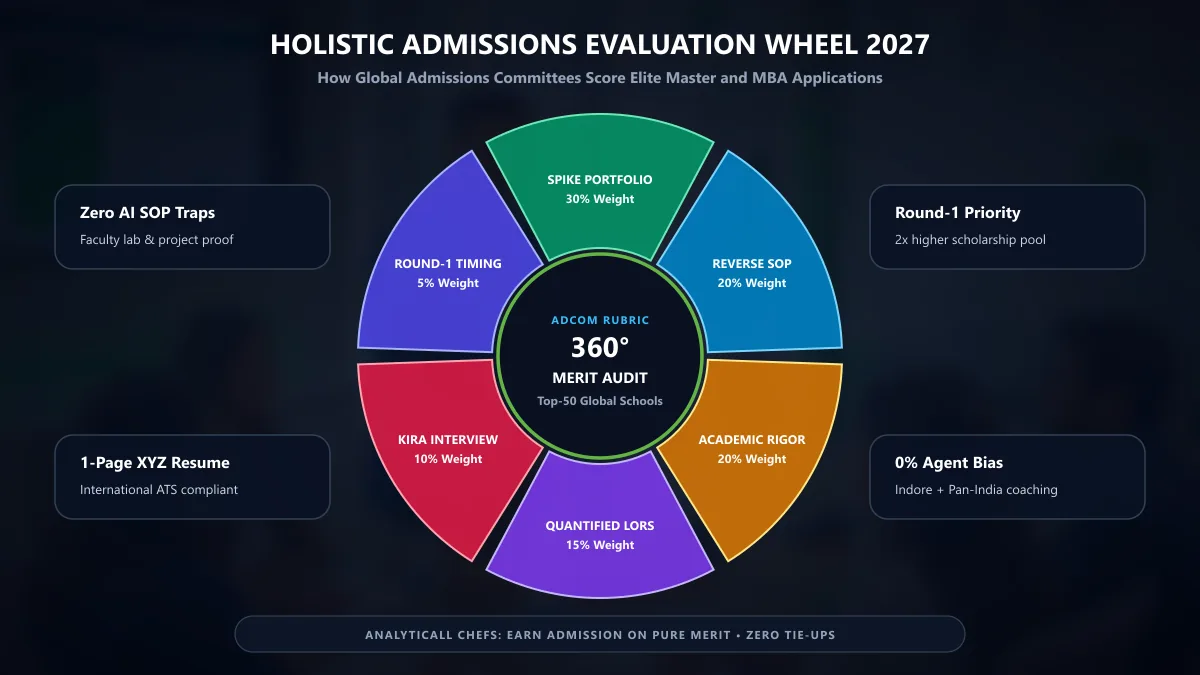
Figure 3: Admissions Committee Evaluation Priorities for Top Global Programs.
At Analyticall Chefs, we teach the Reverse SOP method. Rather than writing essays first, you build three solid projects in May and June. When you write your essay in August, every paragraph points to real work rather than future promises. Our detailed SOP for MS abroad guide explains how to connect completed projects to specific faculty electives.
Keep these four quality standards in mind before submitting your application:
Write in your authentic voice using real project data, avoiding robotic phrasing and generic templates.
Cite two specific courses, lab initiatives, and faculty publications per school rather than broad rankings.
Ask recommenders to state your clear cohort standing, such as top five percent in a cohort of 120 students.
Practice explaining the logic behind your models in conversational sixty-second answers for video prompts.
Month-by-Month Application Timeline for 2027
A successful top university application timeline 2027 runs over four quarters, beginning twelve to fifteen months in advance. You complete your profile review and standardized exams in Quarter One, build your project portfolio in Quarter Two, submit Round-One applications in Quarter Three, and finish visas and pre-departure preparation in Quarter Four.
Application timing plays a major role in securing scholarships. Top universities in the US, UK, Canada, and Europe operate in staged rounds. Because schools maintain international diversity caps, seats and scholarship pools for applicants from India become much more competitive after November.
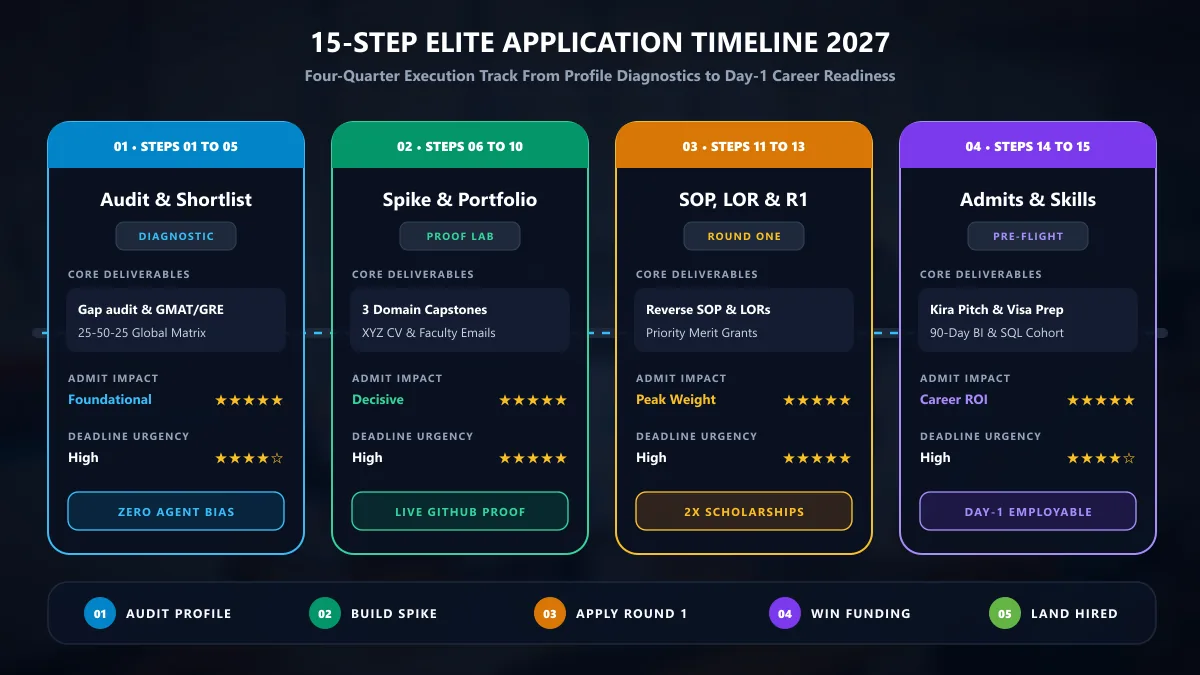
Figure 4: Four-Quarter Timeline from Initial Review to Campus Arrival.
Follow this calendar when preparing for Fall 2027 programs:
| Time Period | Steps | Core Projects & Tasks | Scholarship Impact |
|---|---|---|---|
| Jan to Mar 2026 | 01 to 05 | Transcript audit, credit checks, 25-50-25 matrix & APS filing | Prevents prerequisite credit rejections |
| Apr to Jun 2026 | 06 to 08 | GMAT/GRE, IELTS, 3 domain projects & video walkthroughs | Builds proof of practical capability |
| Jul to Aug 2026 | 09 to 12 | One-page ATS resume, faculty emails, Reverse SOP & LORs | Matches department assistantship criteria |
| Sep to Oct 2026 | 13 (R1) | Round-One file submissions and scholarship essays | Full scholarship budgets available |
| Nov to Jan 2027 | 14 | Video prompts, alumni interviews and Round-Two filings | Secures funded admission decisions |
| Feb to Jul 2027 | 15 | Visas, loans and pre-departure SQL, Power BI & Excel cohort | Prepares for campus jobs from day one |
Why Round-One Deadlines Double Your Scholarship Chances
University scholarship committees allocate the vast majority of their merit funds during Round One and early Round Two. Applicants who wait until March often compete for the remaining five to ten percent of seats after merit grant budgets are already committed.
Four Common Application Mistakes That Lead to Rejections
Every season at our Indore center and across our national cohorts, we audit applications from smart candidates who received unexpected rejections. In almost every case, the rejection traces back to preventable mistakes made early in the process.
Mistake 01: Trusting Commission Agents and Generic Partner Lists
Accepting agent advice that steers you toward low-ranking colleges where they collect commissions, instead of building a competitive profile for top global institutions.
Mistake 02: Submitting AI-Generated Essays Without Real Project Proof
Using ChatGPT to write generic statements of purpose filled with buzzwords, lacking verified links to real models, research papers or analytical dashboards.
Mistake 03: Applying in Late Spring With Passive Video Badges
Waiting until Round Three when merit scholarship budgets are exhausted, while relying on basic online course certificates that admissions officers disregard.
Mistake 04: Delaying Practical Analytics Skills Until Arrival on Campus
Arriving abroad without practical Excel modeling, SQL or Power BI fluency, causing students to fall behind in class and miss out on early campus jobs.
Winning admission to an international university is only the first step. The more important challenge comes during your first semester abroad when professors assign fast-paced corporate cases in Finance, Marketing, Operations, and Management.
Families choosing study abroad consulting Indore Analyticall Chefs focus on both milestones together. You build the practical strengths needed to earn admission to the world's best institutions, and you arrive abroad confident and ready for career opportunities.
Book Your 2027 Admissions Audit at Analyticall Chefs in Indore
At Analyticall Chefs, we operate on a strict Anti-Agent model with zero university tie-ups and zero commissions. Our guidance is 100% unbiased, focusing entirely on rigorous profile transformation so students earn admission into the world's best universities on their own merit. Visit us in person at 809 Shekhar Central, Palasia Square, Indore, or connect with our team online.
Frequently Asked Questions
Straightforward answers on admissions standards, profile building, scholarships, and zero-commission counseling.
How can an Indian student with a 7.5 to 8.2 CGPA earn elite global admission in 2027?
Elite admissions committees look at your overall merit instead of isolated grades. Applicants offset a 7.5 to 8.2 CGPA by building a domain spike. Score above the 80th percentile on GMAT Focus or GRE. Publish three financial or business intelligence models and apply in Round One.
Why should students avoid commission agents for Ivy League, Russell Group or German public schools?
Top global universities never pay referral commissions to agents. Commission agencies earn fees only by pushing students into lower-tier partner colleges. At Analyticall Chefs, we operate on a strict Anti-Agent model with zero university tie-ups and zero commissions. Our guidance is 100% unbiased, focusing entirely on rigorous profile transformation so students earn admission into the world's best universities on their own merit.
What is a domain spike in profile building for top universities across business streams?
A domain spike is deep proof of real-world work in one target field. Skip scattered college club certificates. Finance candidates build three-statement DCF models, Accounting students write SQL ledger checks, Marketing applicants track customer retention in Power BI and HR candidates model workforce attrition.
How should Indian applicants structure a university shortlisting reach target safety list?
Build an eight to ten school matrix across multiple countries. Assign 25 percent to Reach schools, 50 percent to Target schools and 25 percent to high-ROI Safety institutions. Compare US, UK, German, Canadian and Australian programs on curriculum, visas and living costs.
When should students start the top university application timeline 2027 for merit scholarships?
Start twelve to fifteen months before classes begin, ideally between January and March 2026 for Fall 2027. Spend three months on exams and three months on portfolio models. Submit Round-One files in September or October when merit scholarship funding is highest.
Do non-coding BBA, B.Com and Economics graduates win offers at elite business schools?
Yes, global Finance, Accounting, Marketing, Supply Chain, HR and Management programs actively welcome BBA, B.Com and Economics graduates. Pairing commercial awareness with Excel financial modeling, SQL and Power BI separates Indian business applicants from purely theoretical peers.

Study Abroad Consultant & Founder @ Analyticall Chefs | Visiting Analytics Faculty at NMIMS | Dual Master's (US)
Sarvagya Tongia is the Founder and Director of Analyticall Chefs, and a Visiting Faculty member at NMIMS teaching Business and Marketing Analytics. He holds a Dual Master's Degree in Finance and Information Technology & Management from the University of Texas at Dallas (UTD). With extensive international corporate experience working as a data and financial analyst in the United States, Sarvagya brings a rigorous, application-first philosophy to modern education.
Through Analyticall Chefs, he is dedicated to eliminating the traditional gaps in the education system by combining elite foreign education consulting with an intensive skills accelerator. His methodology focuses on transforming students and professionals into high-value, execution-ready assets equipped with the exact technical stack, communication mastery, and strategic frameworks needed to thrive globally.
Top Analytics Skills to Master for Studying Abroad in 2027: AI-Driven BI, SQL & Cloud
The Reality of Business Analytics in Finance: Salary Truths & Career Guide
Earn Admission to the World's Best Universities on Merit
Reject commission-driven agency shortcuts. Partner with Analyticall Chefs in Indore for 100% unbiased global shortlisting, hands-on project mentoring, and Reverse SOP guidance across Finance, Accounting, Marketing, Operations, and HR.
Book Your Free Profile Evaluation